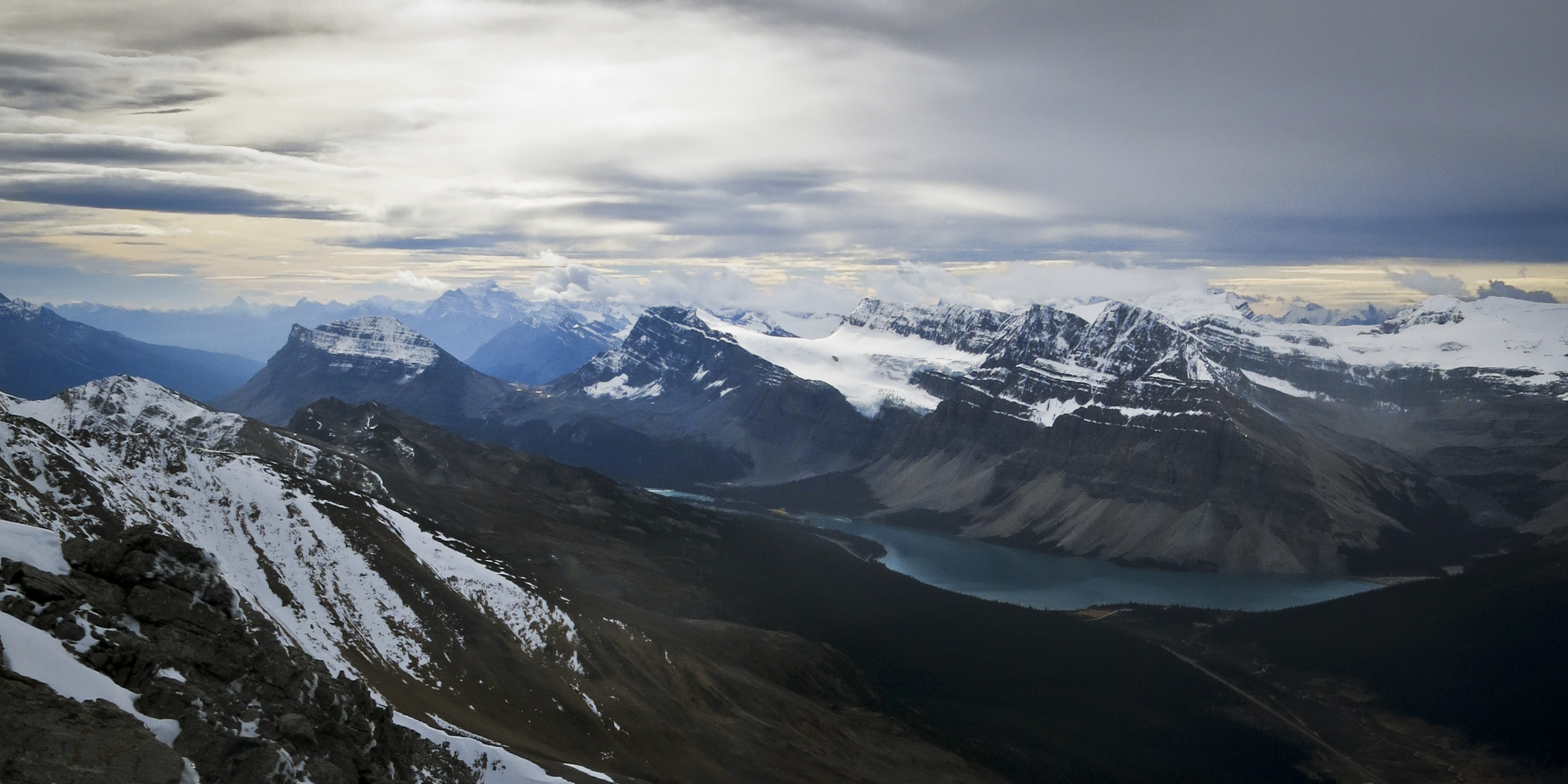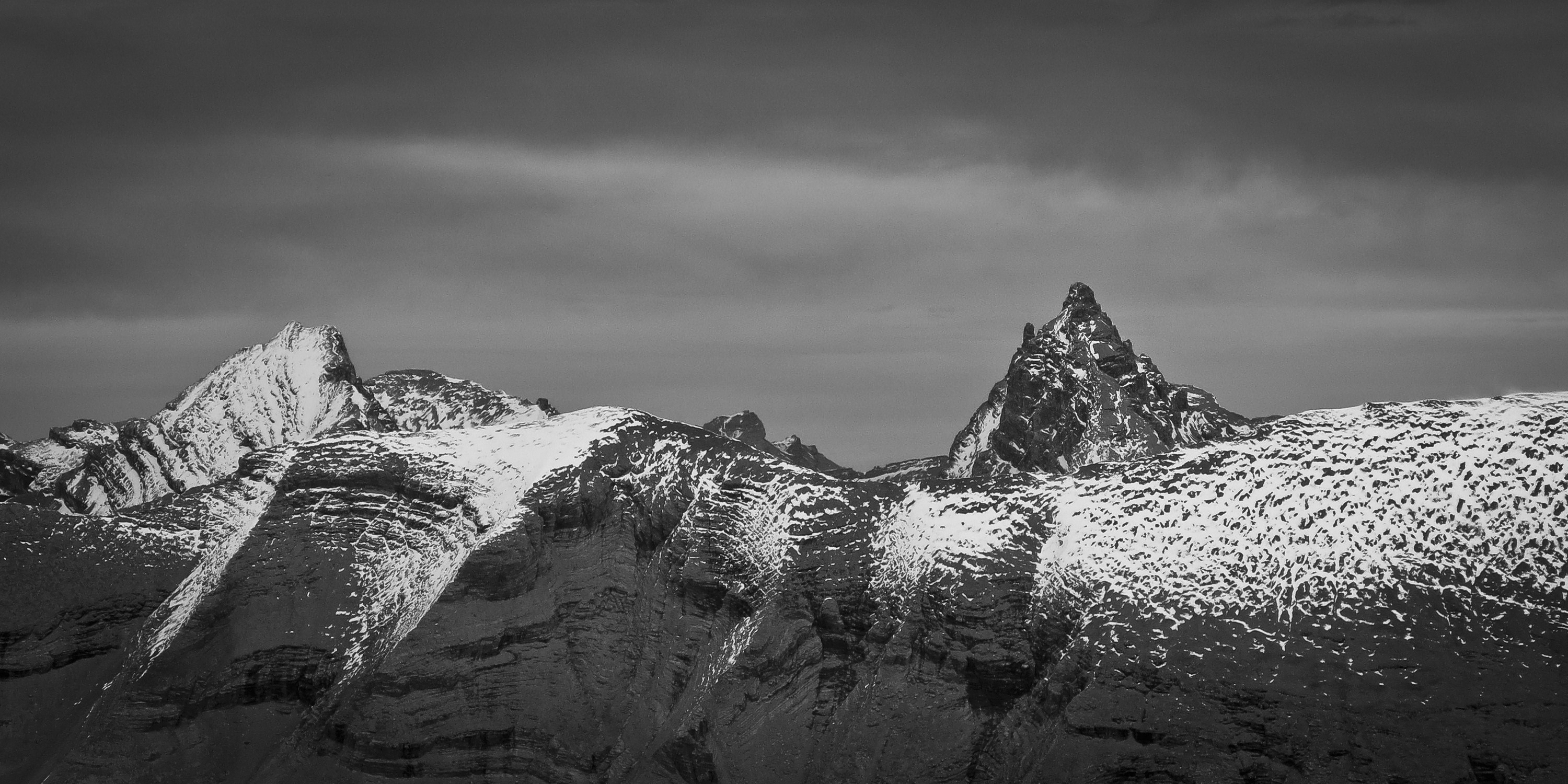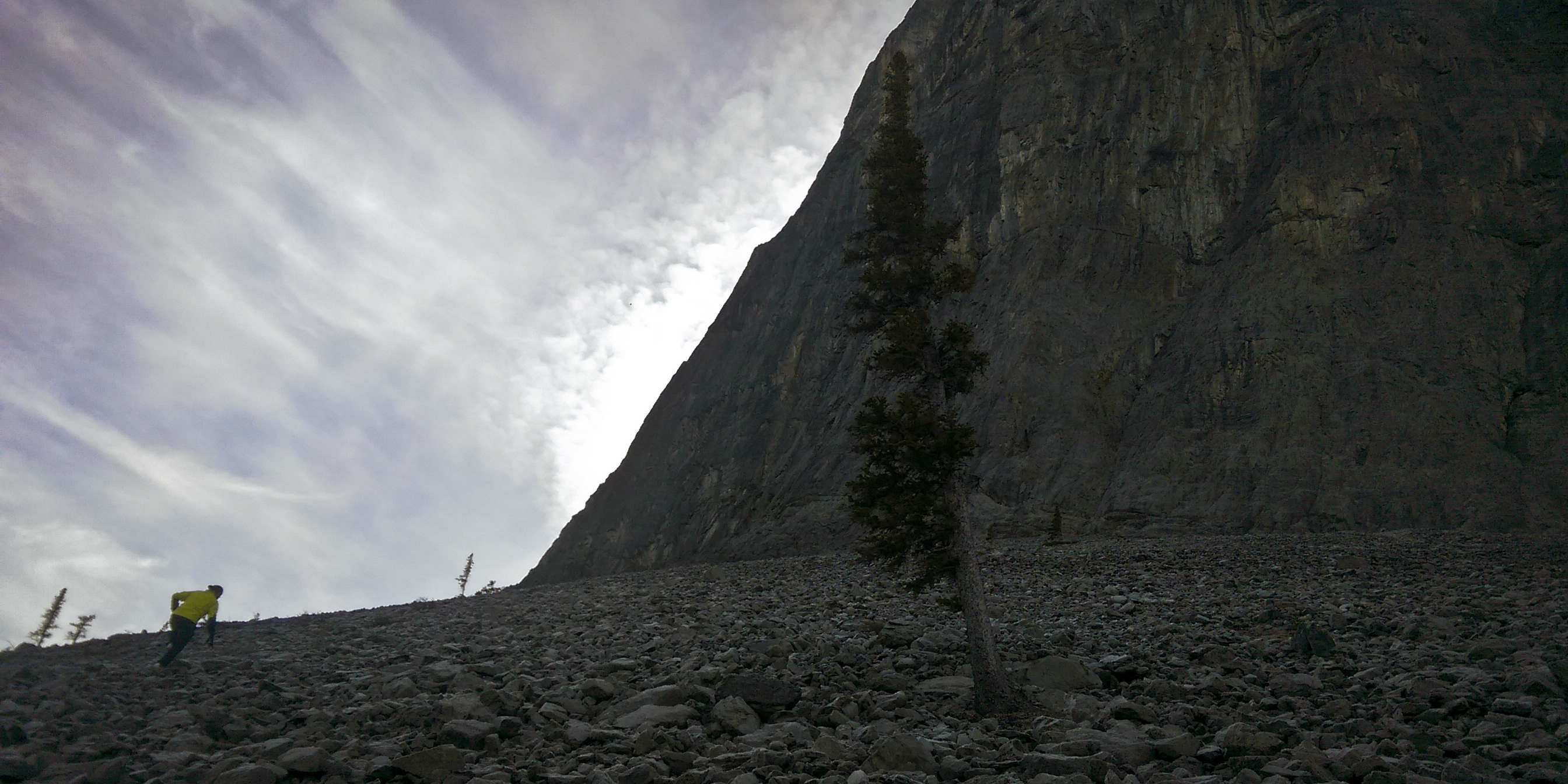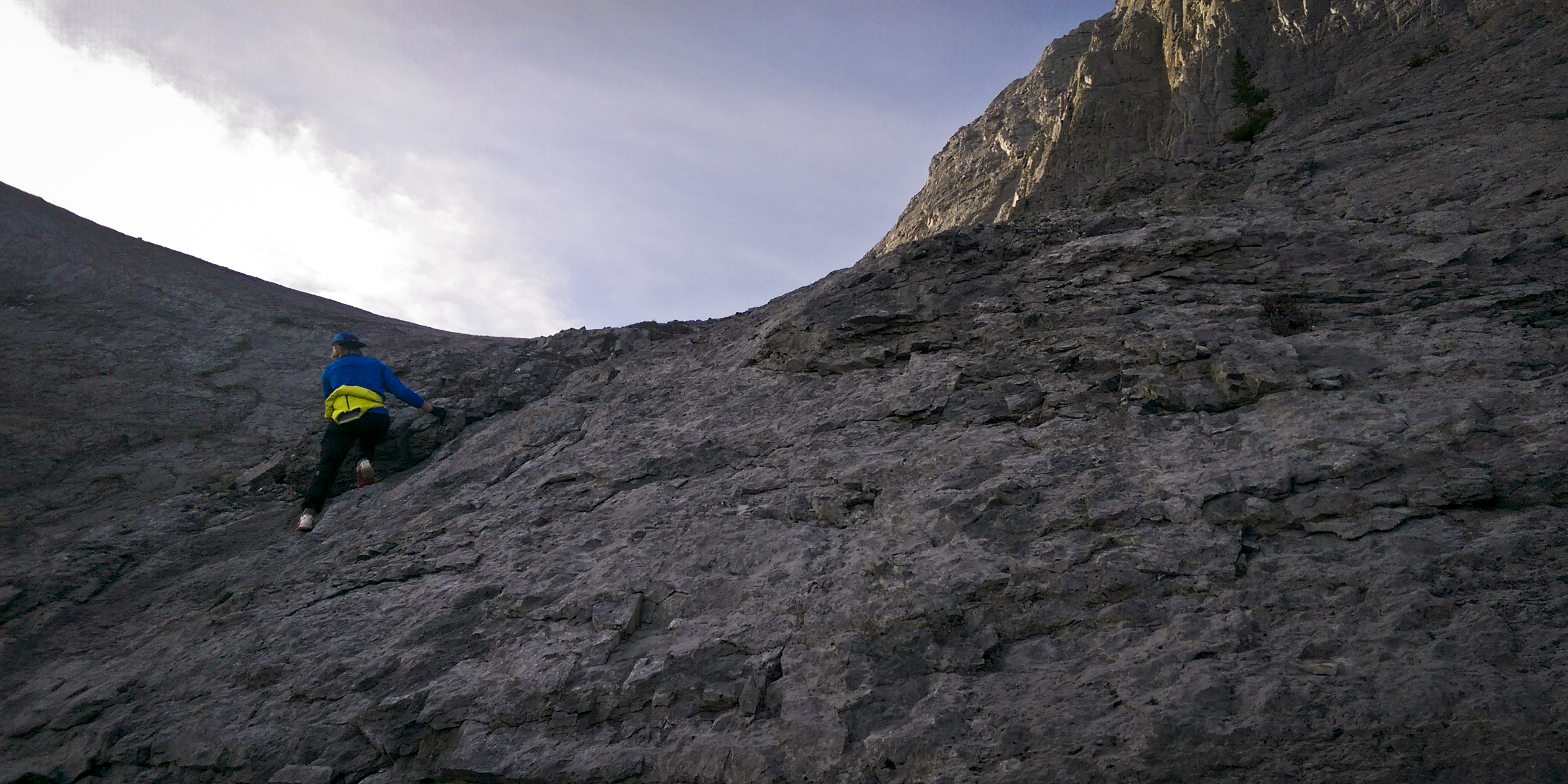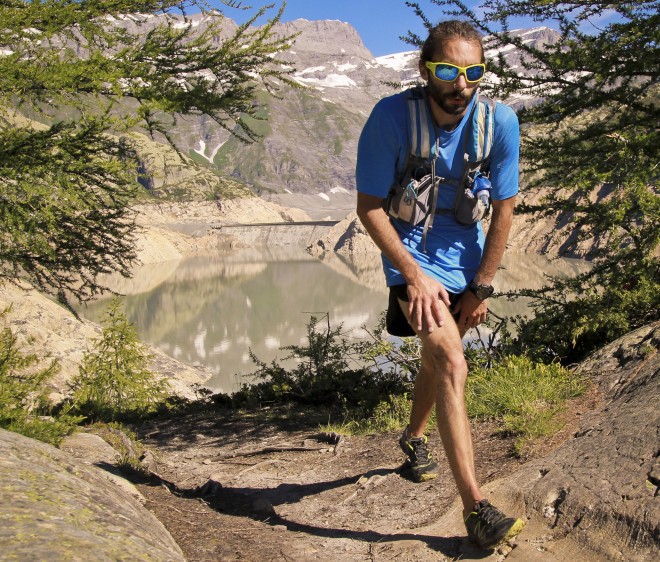
Past & Future, 2016

X1After two months of little running and a week spent in suburban Toronto for the passing of my grandmother, I return to the Rockies with my body and mind truly at “zero”. This hiatus has served to shore up energy to support another nine months of training, racing and sending epic projects in the high country while allowing my body to heal and my mind to relax from last season. Finally, a visit home to the sprawling suburb of Brampton — seeing many family and friends at once; hiking with my dog along the Niagara Escarpment, our old stomping grounds; and paying reverence to the old works of Canadian artist/philosopher/outdoorsmen at the McMichael Gallery — temporarily scoured me of my connection with the alpine, freeing me from momentum from the past and allowing me to spring forward into a new year from an entirely blank slate.

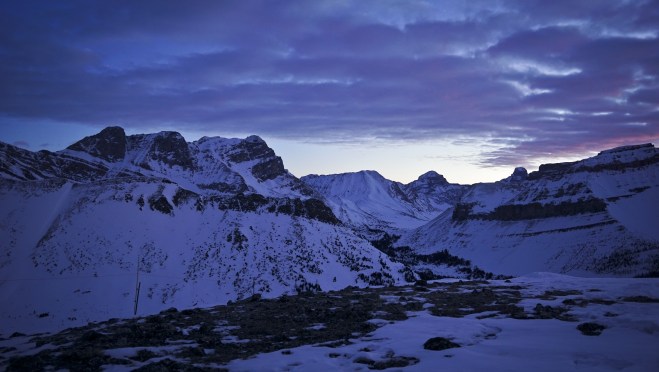
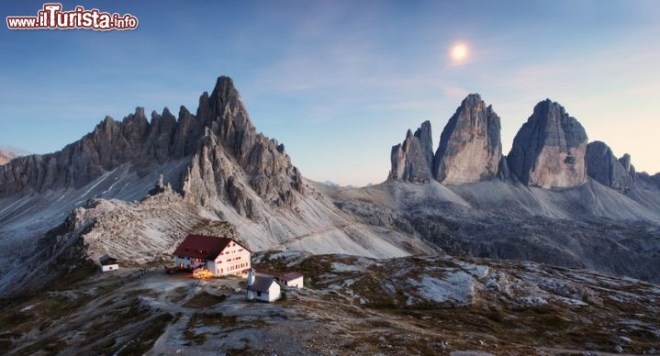
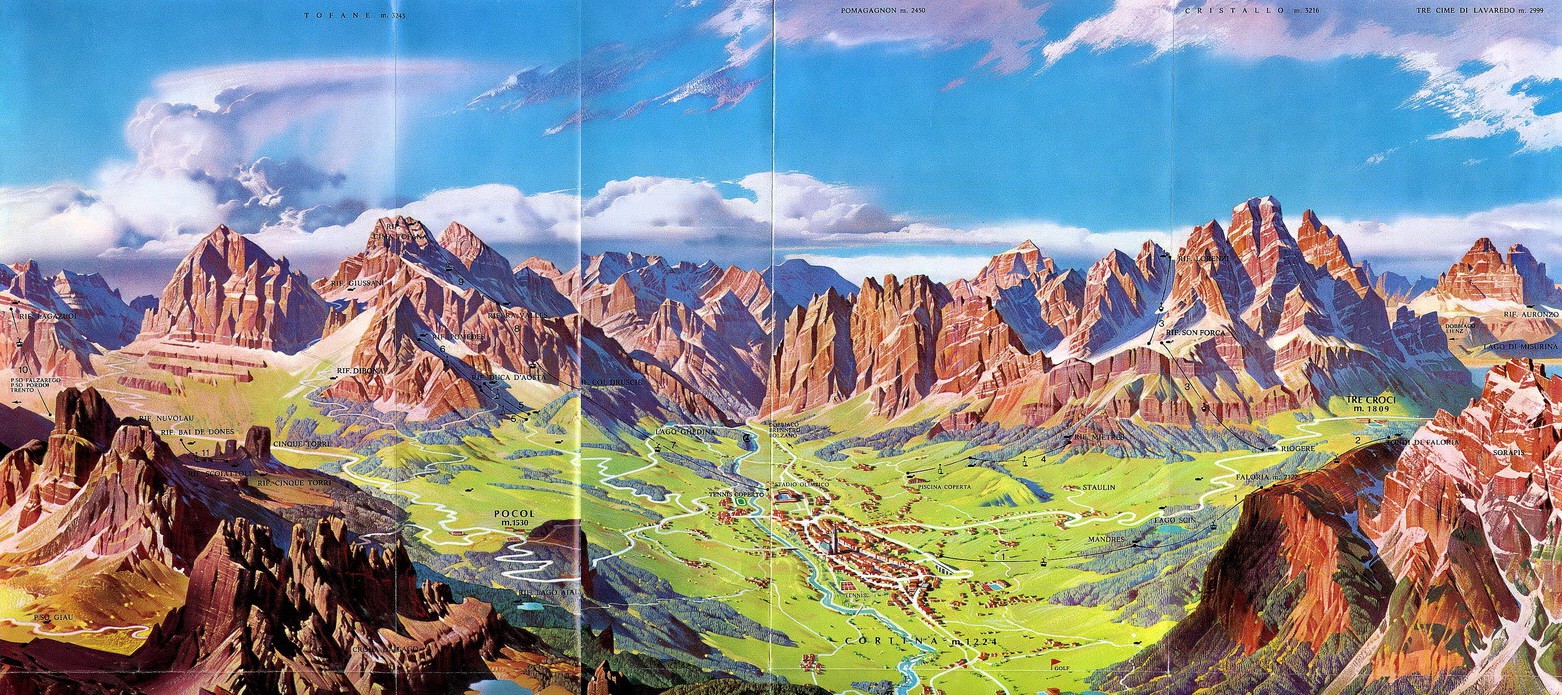
tre_cime_di_lavaredo_rifugioAs for what the future holds, my calendar isn’t really that blank: It looks like I’ll be running another European mountain race, Lavaredo Ultra Trail 119K in the Italian Dolomites in late June. Sean and Jordan from Mountain Stride Fitness got into Cortina Trail 50K during the same weekend so we’ll all be hanging out together and probably visiting Chamonix along the way. Lavaredo will be my longest race to date but I’m excited to take in the eye-melting scenery and even try to improve on my 25th place finish in Cham last summer.

ROBBBSON
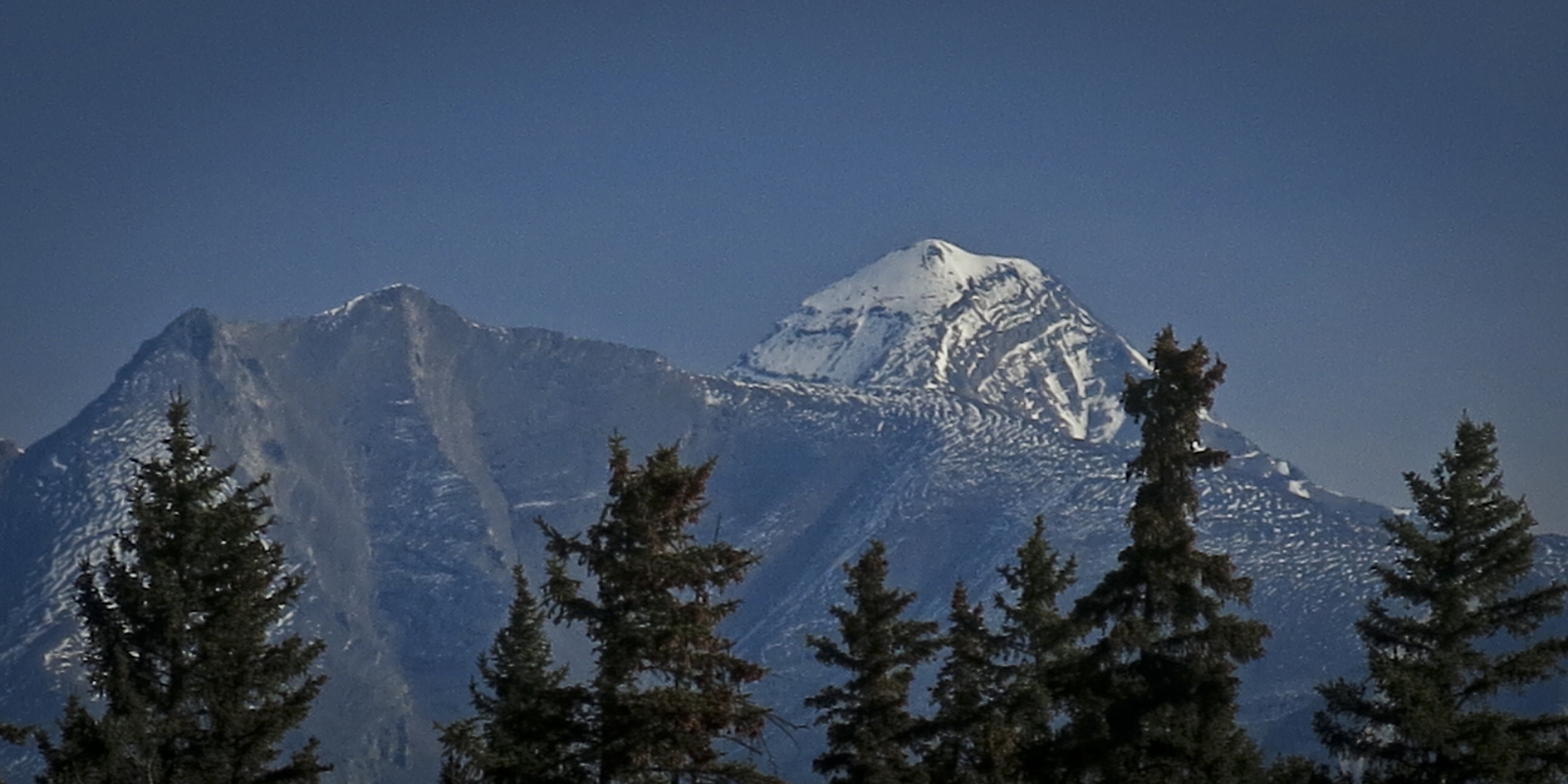
^The Canadian Rockies highest peak, Mount Robson, painted by Lawren Harris, hanging in the McMichael Gallery, Kleinburg, ON. Not high enough.

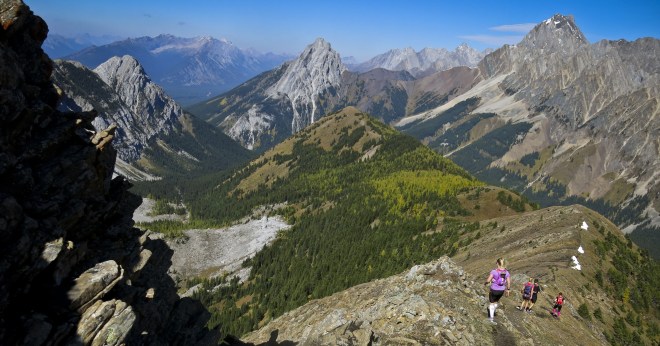
One of my goals for 2016 is to continue exploring my abilities in the realms of decreased oxygen concentration — and by that I mean climbing higher mountains this year. My simmering love-affair with high altitude became apparent after I ran up 3544m Mount Temple in 2013 and the infatuation has only grown since. However, because the highest mountain in the Canadian Rockies, Mount Robson (3954m), is a glaciated behemoth and really not that tall in the scheme of things, my interest lies in higher but less technical peaks elsewhere. I feel a trip to Mexico to climb Orizaba (5636m) is in the cards for next winter but could definitely see myself traveling to Colorado or California to bag some 14ers before that.

30Another goal for this year is to offer an expanded menu of Mountain Stride Fitness trail running retreats, from single day “beginner mountain goat” courses, to weekend retreats based in a hostel, to multi-day tours covering greater distance in a hut-to-hut format. Paddy Sperling and I hosted two weekend retreats in Kananaskis last summer which were really successful and we hope to expand our offerings to accommodate a variety of skill levels, locations and terrain types in 2016. Stay tuned!

09As for the Canadian Rockies, I of course have personal projects stacked high but seem to have finally developed an attitude of quality over quantity. Recognizing that I’ve compiled a mental list of projects longer than the number of weeks available to tackle them, it seems necessary to prioritize. Therefore, I’ve come up with something of a singular project involving five big mountains which I hope to take on and present in video. This project takes the “up and down from town as fast as possible” style of Skyrunning I embodied last summer and applies it to a handful of particularly commanding and iconic peaks across the Rockies, from Canmore to Jasper. This project will hopefully not only get people stoked about mountain running as a subset of mountaineering, but also teach a little geography and why the Canadian Rockies are so awesome at the same time.

All this will surely be interspersed with the typical dose of randomness — foregoing “training” for things more interesting — as the close of last summer provided the seeds for many an exciting proposition including road bike approaches, exposed north face scrambles and even open water swimming…? I suppose I’m looking forward most of all to the alchemical process of refining myself yet again into a sharpened tool, crafted to perform a given job with precision, and experiencing all the metaphysical shit that comes along with it.

Now to go out and actually “train”… How do I tie my shoe laces again?

Past & Future, 2016

December’s Dying Days

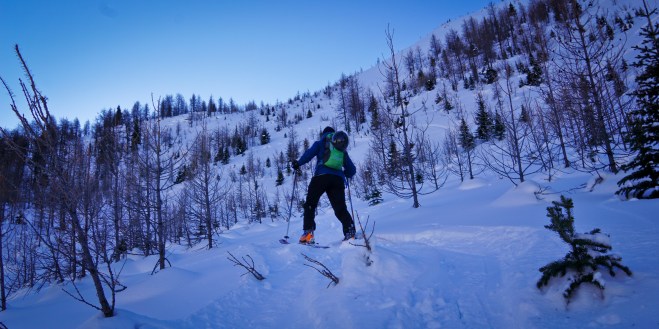
sidedoor2The last month of 2015 saw a continuation of my break from running that started in November, swapping the sport for ski touring which has been infrequent lately as well. I believe this long hiatus from running will be beneficial structurally and in terms of my overall energy going into the new year. My body feels vastly more “together” compared to how I feel at the peak of my training in the springtime — I’m much slower and lack the stamina I’ll develop next season, but at my peak I often feel peculiarly capable of performing extremely well in an event, but beyond that, utterly being shattered.

For now, however, I am the coarse and unshaped boulder, not yet the serrated flintstone. Lots of beer, Christmas cookies and reduced running will turn one into an unshaped boulder, that’s for sure.

v180_3The month kicked off with Vert 180 on December 5, an urban ski mountaineering race at Calgary’s Olympic Park where competitors rack up as many laps as possible in a three hour time limit. The course consisted of a little over a hundred metres of skinning, a short bootpack to the top of the hill, followed by a blistering descent back down again, sans turning. I managed to get nine laps — only half of the winner’s number, to be clear — but more importantly checked off one of my goals for 2015: compete in a skimo race. (2h52m/14.9km/1262m) Movescount.

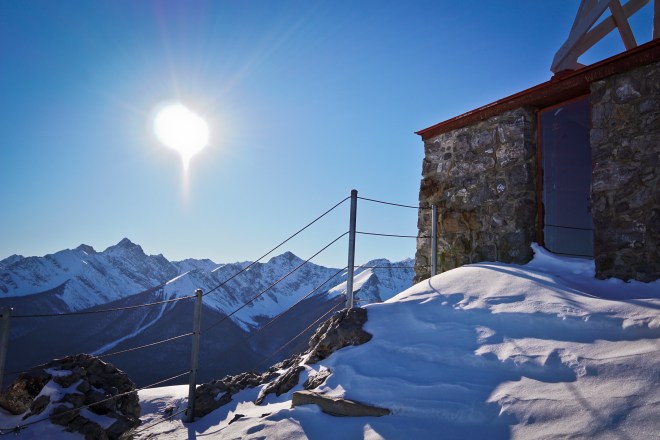
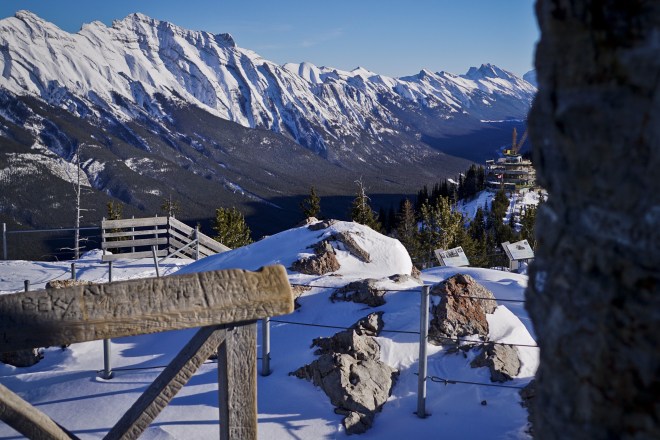
v180_1 v180_2 Screen shot 2015-12-31 at 4.13.00 PM 1On December 10, I tagged Lookout Mountain in the Sunshine Village ski area. Starting at the parking lot at 7:38am, I reached the top of the Great Divide chair in just under two hours. The resort opened while I was still skinning straight up Lookout and a few people stopped to ask what I was doing or to cheer me on. An older gentleman referred to me as “the man” and “his hero” as I stashed my skis on my bag, ducked the ski area ropes and started marching up the remaining twenty metres to the true summit of Lookout. I stood around taking pictures for a few minutes before noticing a ski patroller bootpacking laboriously towards me: how quickly I went from being someone’s hero to being scolded and skiing down with my tail between my legs, haha… (2h23m/17km/1100m) Movescountlookout5 lookout7On December 11, I tagged Sanson’s Peak — the little brick observatory atop Sulphur Mountain that I frequent in the springtime — from my house on skis. Well, mostly on skis. I carried them on my back for about a kilometre before finding snow deep enough to start skinning near the Cave & Basin. I reached the boardwalk along the top of the mountain in about three hours, had a snack, then hiked up to tag Sanson’s in 3h20m. Fast conditions got me back down to the riverside in only twenty five minutes, followed by another forty minutes of flat travel to get back to my place. A far cry from two hour-something ascents in the summertime but this objective is exactly what I pictured when I purchased these skis — out and back from my house; racking up almost a thousand metres of vert; tagging a summit and getting a fast downhill trip as well. (4h47m/20km/976m) Movescount

sulphurskimo1The month concluded with a Christmas ski day riding lifts at Sunshine Village with my girlfriend and a couple runs here and there, just Tunnel and Ha Ling. The act of running feels delicious and I hope to keep things nice and easy going into the new year. I’ll be attempting to rebuild my endurance base during the first few months and want that foundation to be built on enjoyable, playful running.

redoubtThe last two days of December brought Sean to town for a little touring on the skis. We headed out early on the 31st to Lake Louise Ski Area, skinning up Temple access road to Temple Lodge where we were promptly informed that we weren’t allowed to #skiuphill and would have to #earnourturns elsewhere… It was a half hour after opening and there were a good number of people coming down the mountain; I was pretty bummed but have to concede that this activity is better done before or after operating hours. So we skied over into the bowl between Redoubt and Lipalian, wafted through deep power making frequent kickturns to the top of a ridge, turned around, stripped off our skins and skied back down again.

seanlake1 leevinglake

December’s Dying Days

Sunshine, Crud & Skimo Lust

3On the first of November we were hammered by snowfall in Banff. I looked out the window and exhaled a sigh of relief. The previous seven or eight months felt like the longest season ever in terms of running around in the mountains and now I was ready for a break. I hung up my sneakers in the basement, swapped them for ski boots, and continued the whole practice of climbing and descending steep-ass hills, except with skinny planks clipped to my toes instead.

The first and most important thing that happened in November is that I stopped running. During the first couple days of the month, I fought the urge to go climb Ha Ling in whiteout conditions for no reason other than my habituation to doing it. I got a gym membership at the Canmore Nordic Centre, started lifting weights and killing myself with circuits, started walking more and stopped running entirely. My goal was to take my body completely out of running shape, into a more traditionally mountaineering, “slow and heavy” type of fitness, and move back into increasingly faster and lighter activity starting in the new year.

All this is tempered by the fact that I essentially traded trail running for fast and light ski touring AKA “Skimo” as soon as I was able this season. Last year I purchased a lightweight Dynafit setup with the intention of staying fit and exploring the mountains during the wintertime when options for running in the alpine become limited. I didn’t expect to do much true backcountry travel, more avalanche-safe objectives where I can rack up some vert and get sweet views solo without the risk of getting buried.

nakiskaskimo1 The month started with a few forays to get myself reacquainted with being on skis. I skinned up to Sunshine Village the day before opening; broke trail halfway up the backside of Sulphur; climbed and skied unopened Mystic runs at Norquay and messed around at Nakiska too.

That was when a tingling lust for the Ski as a tool for mountain travel began stirring in my heart, and I felt obligated to reciprocate with some type-2 fun adventures…

c

The next three days, I hit the skis hard. The goal of climbing a thousand meters on skis stood out in my mind arbitrarily. On my previous trips this year, I just hadn’t been able to accumulate it so far.

On November 26, I skinned up the old Norquay ski-out that begins at the Juniper Hotel. This is my (and Sean’s) now standard route from town to reach the trailhead for Cascade Mountain. I fortunately found someone’s skintrack up the old black-diamond run but it was so steep I had to bootpack for long sections in deep powder. At last I reached the top of the yet unopened North American lift which services the longest and steepest of Norquay’s ski runs. The view overlooks Mount Rundle, the town of Banff and the Bow Valley corridor stretching towards Canmore. I shredded the wide powder slopes of North American then whizzed back down the narrow ski-out to the Juniper. (6.6km/838m/Movescount/Strava)

b s

On November 27, I still hadn’t climbed a thousand metres on skis. I decided to stay close to home and see how far I could make it up Sulphur, my usual springtime stomping grounds. I started at the Cave and Basin, 0.5km from my apartment and walked for another half kilometre with the skis on my back before reaching good snow where I was able to start skinning. I made good time along the river and up my old tracks from the previous week, seemingly walked-in by someone (or something) and topped up with a few inches of fresh snow.

All of the various animal, boot and ski tracks petered out around my high point from the previous week and so it was trail-breaking time. I slogged for another four or five hundred vertical metres, step by painstaking step. The thought that I could turn around and ski down at any moment was as stifling and omnipresent as the sun but I continued to march — I wanted to touch that stupid observatory on top of Sanson’s Peak, just like in the summertime, but with skis on my back. I haven’t experienced that level of deathmarch in a long time.

Cue the boardwalk, the upper gondola terminal splayed open among tarps and cranes, and that little brick observatory sitting on top of the mountain. I threw the skis on my back and walked up the wooden steps, wading through the snowdrifts, to touch the stupid little brick house that means so much to me. I took some pics, walked back down, click-click, then skied one of the most fun downhill runs of my life. (18km/981m/Movecount/Strava)

2

4

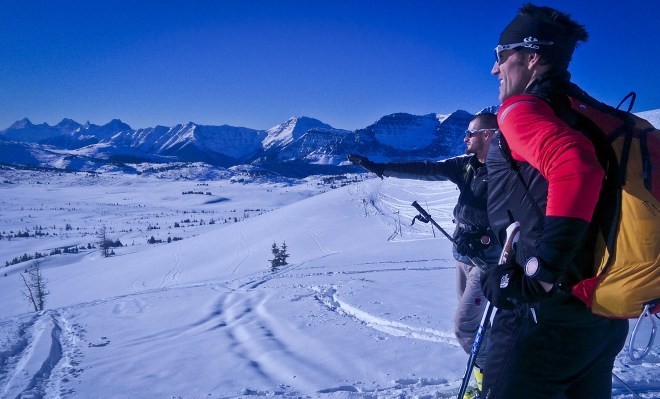
Whilst deathmarching up Sulphur, I had plans to go ski touring with ultrarunners Majo Srnik (@majocalgary) and Andy Reed (@canmoremd) the following day. Fuck, I said to myself, I hope I don’t die… Next morning we met in a surprisingly busy parking lot at Sunshine Village at 8am, an hour before opening. Andy and Majo both had brand-new Dynafit PDG setups with race bindings which, combined with my last year’s PDG skis, definitively made us the Dynafit rando crew.

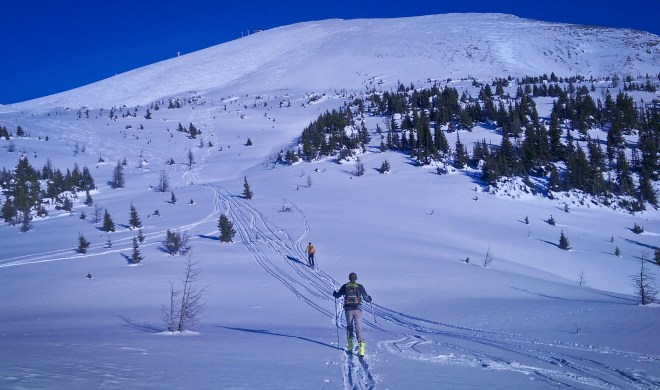
We reached the upper village in about an hour and proceeded towards Lookout Mountain AKA Brewster Rock via a wide arc just outside the ski area boundary. We approached the sustained climb up Lookout and Andy charged towards the sky, setting a steep track across hardened snow where little more than our steel edges gripped the slope. Did I mention Andy is “tapering” for TNF 50 in San Francisco next weekend?

The higher we climbed, the crustier the snow became and bare rocks started to punctuate the skimpy snowpack until we topped out at the Great Divide lift at 2700m, eleven hundred vertical metres above our start-point.

3 4 sunskimo1

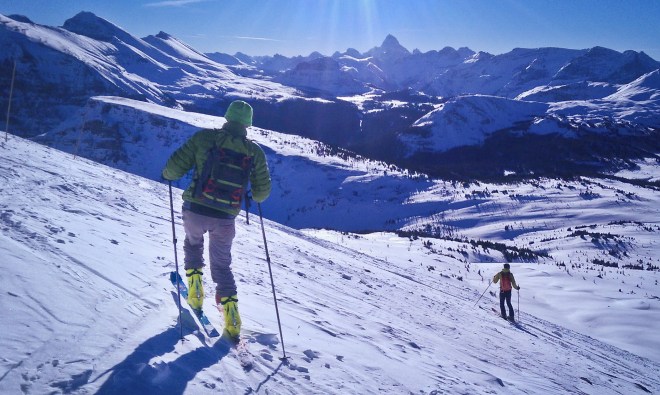
After a brief snack overlooking the crest of the continent, we skied down the run, ducked the rope and descended through steep crud to reach an area of thirty degree champagne powder that we milked for two laps of exquisite riding. Then we were off in another wide arc through the meadows — over rolling terrain that had us stripping skins for short downhills, then replacing them moments later — to reach Mount Standish at 2398m.

6 7 9

After taking in the views of Rock Isle Lake and a snowy continental divide, we stripped off our climbing skins for good, stashed them in our jackets and tore down through the ski area and back to our vehicles in the parking lot in less than twenty minutes. (23.5km/1446m/Movescount/Strava)

My newfound respect for the skis are akin to how I came to recognize the bike as a tool for mountain travel this past summer. Each tool has its place in the kit of a well-rounded mountaineer and I suppose the goal is to become competent in each domain, whether it’s running, hiking, climbing technical rock, skiing, biking, swimming, etc. Besides, if you live in the mountains in Canada and don’t ski, snowboard or do something to keep yourself busy, then winter just sucks, and as a summer-loving mountain runner it’s more like some kind of sadistic hell.

And now it’s a buttery heaven of lung-hucking bootpacks and surfin’ through pow. Hallelujah.

10 8

Sunshine, Crud & Skimo Lust

The Longest Season

baowhI was slogging up some mountain the other day when I started counting on my fingertips: how many months had it been between February and now? I’d started training consistently last February, bagged Rundle in March, got injured in April, ran the Mont Blanc 80K way back in June… Now here it was, practically November, the days increasingly short but the weather fine, scramblers still making summits throughout Banff.

In other words it was the longest peak bagging season ever.

In northern-ish Canada, we tend to complain about the shortness of our summers, especially in the mountains, where we love to do stuff during our four months of occasionally decent weather. Well, last winter was rather springlike and this fall has been gloriously summery, making for the peak bagging season scramblers could only dream of.

After fourteen hundred kilometres on my spindly little legs this year — a total of 238 hours moving fast and light in the mountains and over a hundred thousand metres of ascent — you can bet I’m stoked for our recent powder days.

Unfortunately, I’m already thinking about next year. A few days ago, I gained entry into The North Face Lavaredo 119K in the Italian Dolomites for 2016. Though I’m not quite sure how next year is going to pan out, I’m excited to have what is commonly described as “the most beautiful race in the world” tentatively on my calendar for next summer.

Onwards to the events of October!

5October 11 was Grizzly Ultra in Canmore, a fun late-season 50K that draws together runners from all over Alberta. Paddy and Jordan from Mountain Stride Fitness raced whilst Sean and I stood around cheering everybody on. Jordan finished in 9th place in 4h52m and looked solid all the while. Way to go, buddy!

6^ Jordan Sauer en route to a top-ten spot at Grizzly Ultra.

The weeks before and after Grizzly comprised a bunch of random jaunts, shifting back and forth between bigger and smaller objectives as the weather would dicate. During the middle of October, I did a sunny loop on Yamnuska; climbed to the false summit of Observation Peak on hard snow with an ice tool; mucked around for 30km in the Castle Mountain massive and tagged EEOR and Goat’s Eye as well. As conditions continued to be snowfree, it was hard to say no to a run in the alpine though difficult to commit to anything too crazy as the mornings grew frigid and hours of daylight scarce. I wrote about this internal conflict a little bit last year in Fall Moods over on the MSF blog.

7 8 2^ Observation Peak

From October 17-24, my folks came to visit so I took the opportunity to step back from incessant peak bagging and tried to be a good host. Via my suburban parents, I looked at the Rockies through a child’s eyes — or at least with tourists’ eyes — as we ferried around to the many jaw-dropping locations that have been photographed and gawked at time and again.

As the end of the month approached, it was obvious that I wasn’t a hundred percent satisfied with my summer, though I certainly had lots to be grateful for. On October 20th, I wrote:

I guess the feeling is that at the end of the season I haven’t really faced my fears and have largely stayed inside my comfort zone, and after all the side-stepping around the real challenges I ultimately feel disappointed and unfulfilled.

Disappointment is a theme I’ve touched on in my last few blog entries, but suddenly I knew why I felt disappointed, that I was justified to feel disappointed but also knew how to fix it. My disappointment stemmed from my own unwillingness to push myself out of my comfort zone, to face my fears of exposed, technical terrain, and I wouldn’t be truly satisfied until I did something scary. On October 23rd, I wrote:

The eternal conflict between comfort and fear. I’ve always been afraid to explore and push my boundaries, but if it gets too comfortable, I start to get bored. I can do Fairview and Ha Ling over and over but I will never attain the feeling of satisfaction that comes from having met and overcome fear. I’ve said this before: this whole activity, for you, is all about pursuing fear.

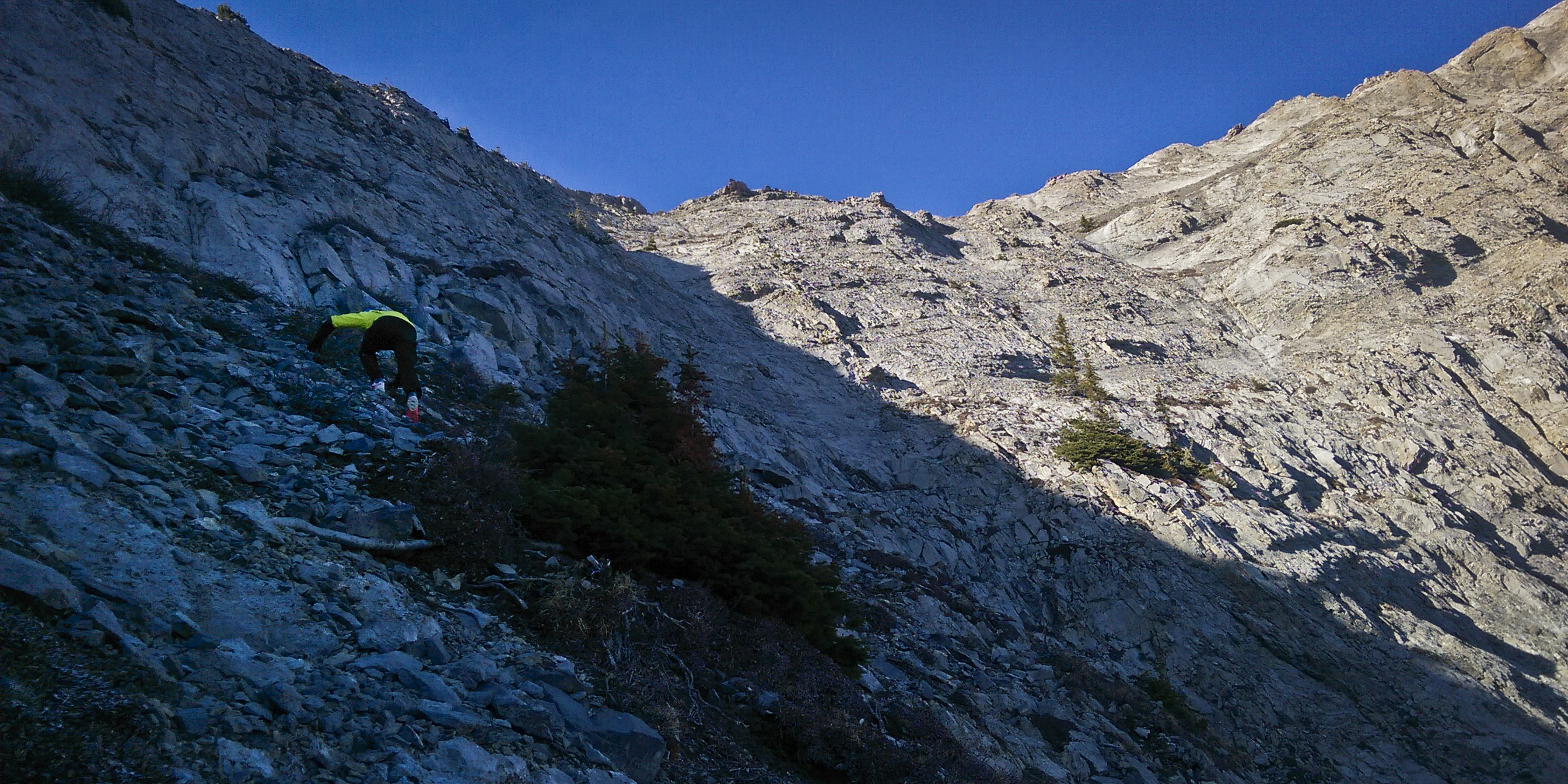
As the weekend approached, Sean mentioned he was coming to the mountains and had an objective in mind. Sean wanted to explore an esoteric scramble route up the steep, rocky north bowl of Ha Ling Peak, a route considerably more exposed and hands-on than the standard trail to the top of the mountain. We were aware the bowl had been ascended previously by non-climbers so it wasn’t necessarily a death sentence, but I was inherently uncomfortable. A part of me deeply desired to send this route but my mind immediately started thinking up alternatives: Sean said he was open to other options, maybe I’ll take him up Observation Peak… Maybe we can bike into Moraine Lake and do something there… I.e. something that doesn’t scare me.

Having reached the previous conclusions, it became obvious what I was doing and that a big, fat dose of facing my fears was precisely what I needed. So around 10am on October 25, I met Sean in Canmore and we drove up to the climber’s parking lot at the base of Ha Ling and started slogging.

2Other runners who have done this route might snicker — and in retrospect it’s not that bad — but on our approach I was gripped. We treaded loose cobbles on our way to the bowl, frost covering everything on the shadowy north aspect. We rounded a corner into the bowl and left shitty terrain for really shitty terrain, scrambling up short slabs littered with scree and interspersed by green patches. We reached a sizeable class 4 pitch that we spent a good half hour probing, convinced we had to climb it in order to continue. After basically giving up, we traversed along the base of it until we found a weakness in the rock band weak enough to suit our scrambling prowess and clambered up.

3One weakness led to another and we zigzagged back and forth on exposed and chossy ledges, climbing up broken slabs in between. By this point we were closer to the col than the base where we started and it seemed that the most difficult challenges were behind us. Adrenaline tinged with paranoia transformed into euphoria mixed with enthusiasm and suddenly I was stoked. We gained a “green ramp” which deposited us onto the Ha Ling-Miner’s Peak col amid a conga line of hikers headed for Ha Ling’s summit.

4The first words out my mouth were, “That was awesome! I would totally do that again!” or something to that effect. We trotted over to Miner’s to inspect a possible Grassi traverse, then trotted back over to obligatorily tag Ha Ling as well.

Mountain running has taught me many philosophical lessons and has become more purely metaphysical throughout the past year. When I was training on Sulphur in the springtime, I learned to reduce my resistance and embrace the elements. In Chamonix, I learned to trust my training and let myself be guided towards success. On the northern aspect of Ha Ling last week, I learned that when I push myself outside of my comfort zone and do scary things, it somehow opens the doors for new opportunities to happen. This is my newfound perspective on fear.

5

The Longest Season

Aylmer Duathlon & Assorted Reflections

11Last month I expressed mild disappointment over not achieving any long technical days in the mountains this summer. That is, little in the way of exposed ridgeline traverses, multipeak link ups or self-supported ultras in the backcountry. I mainly stuck to single summits, many I know well, going faster and lighter than ever before. In general though, one can either choose to be mediocre at new things (the definition of “novice”) or become really good at a given activity by doing it over and over again. It’s obvious now that the fruit of this summer wasn’t an extension of my activities into new domains, more a sharpening or deepening of what was already there.

This summer still had its unicorns and Mount Aylmer was one of them. Sean and I ascended this 3162 metre peak in June before I left for France and before Parks Canada seasonally implements restrictions on the trail to minimize encounters with grizzlies. Once the hiking restrictions ended in September I gazed out my window at Aylmer, then down at a window of good weather forecasted on my smartphone and knew my summer had built towards this objective: tagging Aylmer from town.

There is something to be said for “town” in the context of mountain running — mostly I’ve said it here — but in essence, it provides contrast. “Town”, the seat of comfort and habitation, is Alpha to the summit’s frigid, blustery and uninhabitable Omega. At the same time, the barren summit represents challenge, growth and the exaltation of our greatest selves while the couch, cafe or office chair implies to mountaineers a stagnance that reeks stronger than death.

This year I came to appreciate diverse forms of locomotion in the mountains, particularly how a bike can be integrated with bagging peaks. Seeing only few weeks of non-winter left in the alpine, I felt like I had a choice: I could hop in the car and drive somewhere and do a gnarly ridge traverse or maybe link a couple peaks, or I could travel under my own power to a mountain I reverently stared at from my window every day, and do it faster, stronger and in a 100% human powered fashion.
ay1There’s nothing novel about bagging peaks on a bike, as Anton spent the summer rehabbing his shin by biking all over Colorado and Justin Simoni climbed the state’s 54 fourteeners in a row, pedaling in-between them. If mountain running is supposed to be about distilling mountaineering to its most minimal form, there ultimately seems something superfluous about driving a vehicle to the trailhead to do it.

My day doing an Aylmer duathlon started at seven AM with a calzone and espresso. I left the house at 7:43AM, saddling up on my aluminum framed Argon 18 roadie and riding out of town.

The ride out to Lake Minnewanka took half an hour and passed by easily and quick. I locked up my bike near the Minnewanka boat docks and started trotting. After departing the lakeshore trail and heading towards Aylmer Pass, I bellowed with greater volume and frequency than usual to warn off any grazing bears.

image

The traverse on talus below the ridge was fun as I hopped from rock to rock whilst admiring the flawless weather and listening to Sweet Valley at full blast. When Sean and I bagged this peak in June, the summit was enveloped in a dark cloud as we topped out above the avalanche gully. Today it was a hard, blue sky from one horizon to the next.

95-2 The homestretch to the summit is steep but untechnical and I slogged at a pace that was actually too hard for the altitude I was at. I repeatedly had to stop and catch my breath, reminding myself to hike slower or frustratingly redline myself every couple minutes.

I tagged the top in 3h57m, adjusted the poor wooden stick stuffed in the summit cairn and took in the scenery. “The view is pleasing but not breathtaking,” says Kane in the guidebook, but it’s pretty decent. Prairies to the east appeared like the placid surface of a lake while views westward grew into a swelling sea marked by 11,000 foot whitecaps — Assiniboine, Temple, then the Goodsirs, looking like Dracula’s castle in mountain form.

7I hung around on top for nineteen minutes then headed down, plummeting 1600 metres in a fraction of the time it took to get up there. The only complication I encountered was descending too far down the avi gulch, past the faint Aylmer Pass trail which intersects it. When the eerie feeling of, “Something doesn’t feel right,” struck, I turned myself around and marched back up the drainage for a couple minutes until I located the path.

8bThe jog back to my bike was mundane but the lake was pretty and provided a cool breeze which made things quite comfortable. I remember our run in June being sweltering on the way out and on that occasion added injury to insult by bashing the soft underside of my foot on a rock. I reached my bike in 6h20m and flew mostly downhill back to Banff Avenue and Caribou Street in 6h49m, only nine minutes longer than our trailhead-to-trailhead time when we drove there in the spring.

Now when I look out my window, Aylmer is like a friend; a neighbour that I nod to, and it nods back. My experience with this mountain was more than a fling, more than just ticking the peak in the back of the scramble book and that’s it. I had a crush on Mount Aylmer and this is how I expressed it, and I’d like to think Aylmer recognizes and respects my effort in some metaphysical way.

Next summer, I just gotta swim across that lake and make it a triathalon.

1Splits:
0h30m  Lake Minnewanka boat docks
1h31m  Aylmer Pass/Lakeshore jct
3h57m  Mount Aylmer Summit
5h31m  Aylmer Pass/Lakeshore jct
6h20m  Lake Minnewanka boat docks
6h49m  Banff (Banff Ave./Caribou St.)

50km total (20km bike/30km run) | 2127m vertical  [GPS data]

Aylmer Duathlon & Assorted Reflections

Race Report: Glacier Grind 2015

4It was a dark and stormy, err, morning. I sat inside Denny’s pondering the eternal question: shorts or tights? Shorts or tights…

I was in Revelstoke for Glacier Grind, a forty-three kilometre mountain race hosting its inaugural edition that September. The first ultramarathon to be held in a Canadian national park, the race was moved from Rogers Pass due to unusually active grizzlies in the area. The revised course scales Mount Revelstoke and climbs to Jade Pass before plummeting back to town.

The race started at seven. Runners gathered loosely and hesitantly pushed forward to form a group. It was the least energetic start to a race I’d been to — almost solemn — but I could dig it; we were all a little tired and concentrated on the challenges to come.

The course began with a 5K loop of rolling hills before earnestly cranking its way up the mountain for over a vertical kilometre. I stuck to the back of the leaders, trying not to tire myself too early; flat, fast running isn’t my strength and I hoped to catch a few people once we hit the big climb.

7I was jamming along with Vince Bouchard, Ellie Greenwood and a couple others when suddenly there was doubt whether we were going the right way.

“Guys, we’ve already been here before,” said Ellie and we all came to a halt. “We’ve already done this.” We turned around and backtracked to an ambiguously marked junction where we had made our error. Ellie, Vince and I rejoined the main pack only to try to recover the places we’d lost. After a few minutes, I was surprised to see a short European-looking guy running alongside me. Then I realized it was the race’s strongest competitor, Adam Campbell.

“I thought you were way up there,” I said, but Adam had taken the same wrong turn we had and was potentially set even further back. “How many are ahead of us?” he asked.

“I dunno, maybe ten or so” I said, admittedly disoriented since re-entering the pack. At that moment, however, we passed the lead runner and stepped into first and second place.

So began The Climb. Adam jogged up the steep incline as I hiked powerfully behind him. The pursuit proceeded into the alpine where dense forest became punctuated by isolated meadows that looked like unkempt golf greens. Adam disappeared into the mist as the inky pool of Jade Lake appeared below, rimmed by what looked like a huge crater.

8 Adam came whizzing out of clouds towards me. Having tagged the top of 2192m Jade Pass, he was now halfway done and headed for a brief sidetrip to Eva Lake before descending back to town. I continued slogging into the mist, beads of rain falling off my cap, until two dudes appeared huddled in a sleeping bag on a tiny patch of grass in the immense ocean of gray. I munched two gummies, turned around one hundred and eighty degrees and headed back the way I came.

My muscles were getting tight during the hike up there but were now in active rebellion:  calves, hamstrings and achilles all collectively teetered on the brink of seizure as I pleaded for them to cooperate. Second place finisher Matthew Fortuna came striding down behind me and we soon encountered the rest of the racers making their way uphill in the rain.

11228140_1133607019997622_7829907251956139459_oAfter leaving the checkpoint at Eva Lake, Matt and I took a wrong turn — me for the second time — descending needlessly to some lakeshore before realizing our mistake. We trotted back up the hill again, having lost no places but maybe a little momentum.

I just wanted to reach Heather Lake where a concerted descent back to town finally began. Jogging through the meadows was more troublesome for my body than going downhill and I consumed every calorie I’d brought in pursuit of relief for my cramps. At Heather Lake I filled up a bottle with electrolyte drink and departed, spotting third place finisher Mevlut Kont coming up behind me from across the pond.

3Somehow I managed to remain vertical whilst descending Lindmark, a twisting rivulet of jumbled stones half the width of singletrack, dropping precipitously beneath one’s feet. My shoes skipped from rock to rock but simply slid across the surface of each. Mevlut came barrelling down behind me as we cruised into the lush interior rainforest that is unique to Revelstoke. “This is fucking cool!” I said to my opponent, and he agreed.

The cramping in my legs had now reached its peak and the narrow trail spat us onto a paved section of the Meadows in the Sky Parkway. The moment I hit the pavement, my legs froze up and refused to run. I stood there on the road, driving thumbs into my calf with full force, yelling at my legs, “PLEASE! NO! PLEASE FUCKING RUN! PLEASE! FUCKING! RUN!” as Ellie trotted up behind me and into fourth place.

I thought my race was over, that I would be forced to hobble to the nearest convenient place to drop out. Fortunately, freefalling downhill proved easier than jogging on the flat road and I managed to continue. The dull roar of the train — so loud and harsh a presence in town — I found soothing as it grew closer. “Ah, city sounds,” I said, never liking the idea of getting out of nature more than at that precise moment.

I broke out of the trees, back into civilization, and headed straight for the museum where the race began. I tossed a glance over my shoulder and jogged towards the finish line, feeling pain blossom throughout every cell of my body… And the moment I crossed it, it was gone. I finished the race soaking wet and mildly hypothermic but my internal mantra was no longer a string of expletives mixed with prayers and supplication. I was being hugged and congratulated and chatting with strangers whom I’d played leapfrog with all morning, as though they were friends I’d bumped into at the grocery store.

Four hours, fifty-six minutes after departing the Railway Museum I finished the race in 5th place. Being competitive as an athlete is very new to me; it has always been my tendency to screw off and do my own thing rather than try to perform better than somebody else. I’ve spent most of my career simply trying to survive mountain races and have only recently tried to do well at them. However, I see my performance in races as a direct reflection of my craft; of the machine I’ve constructed, the relationship I’ve developed with the mountains. So it is with great satisfaction that the season ends with my best personal results in some of the most challenging events I’ve undertaken.

Now, coffee.

Race Report: Glacier Grind 2015

Summer’s Sunset

40August flew right by with a flurry of disparate summits, though I feel like I underutilized this prime part of the season, for sure. The positive perspective to my summer is that I have remained healthy, increasingly fast in the domain of running up and down mountains, and have learned a lot about my overall system and how to sustain and/or tweak it. I have become lighter, more minimal — practically naked at times — which translates directly into speed and a deeper relationship with mountains I already know. I’ve also spent more time above 3000m than ever before, which is important to me, to visit that zone where the rest of the world is muted and life consists solely of the elements, all amplified to a violent pitch.

Yet I can’t shake the feeling that complacency kept me from pulling off any “big projects” this summer, or really any big days, barely running anything over 30kms since the Mont Blanc 80K in June. Distance isn’t really what matters to me, it’s the feeling of adventure, mainly gained from long distance in the backcountry, and I didn’t do any long backcountry trips (like last summer) either.

The weather in September has changed abruptly to autumn, snow has fallen and I doubt the stuff at higher elevations is going away. My mindset has shifted to two upcoming events this month, then making the most of fickle fall conditions until my parents come to visit in October. September 11-13, 2015 is our second Mountain Stride Fitness retreat in Kananaskis, designed to transport your trail running to an alpine landscape of peaks, ridges and valleys. We still have a few spots available! See mountainstridefitness.com for more info.

September 18-20 are three days of Golden Ultra in Golden, BC. I won’t be racing but other members of the Mountain Stride crew will be. I’m excited to see what the race organizers have devised for their Blood (VK), Sweat (55km) and Tears (20km) races. I ran the vertical kilometre in Golden last year and feel the area has great potential as a trail running destination. I’ll be heading to Golden to take pictures and see my crew.

Wedged into the middle of the Golden Ultra weekend is the 5Peaks Glacier Grind in nearby Revelstoke, BC that will be my second and final trail race of 2015. I originally signed up when this race was supposed to take place in Rogers Pass and had some 4000+ metres of climbing to its name. Swarms of hungry grizzlies caused the race to be moved to Revy, where it will begin in town, race to the top of Mount Revelstoke and descend to Jade Lakes, turn around and head back up over the summit and plummet down to town. The new race is slated to be 44km with 2600m of climbing, a real SkyRace format that should be a fast and exciting alpine race for sure.

Other randomness:
Check out this sweet profile of the Banff Three Peak Challenge, written by my friend Tera Swanson and published by local Banff mediahouse Crowfoot Media. The piece details the history of attempts on the 70km/5000m route which ascends three peaks around Banff townsite. The article also includes bits of interview with my Mountain Stride buddy Sean Bradley, who now holds the FKT, and a few pictures taken by me during his attempt last July.

Without further ado, let’s get to some of the trips I took in August:

01/08/15 – Edith North (2554m) – 15km/2h57m/1314m
A blistering run up the north peak of Edith that was basically nude, save for a pair of split shorts, running shoes and 500mL of water. Apparently I didn’t take my phone because I have no pictures and almost forgot about this trip until I looked at my Movescount page. Another example of going faster, lighter and naked-er on mountains I know well this summer. The temperature was bound to rise over 30 degrees celsius that day so I had to ration my water, taking small sips and sloshing them around in my mouth to alleviate the symptoms of dehydration to trick my brain. All of the gullies en route to Cory Pass ordinarily offering water in the springtime were bone dry. I hit Cory Pass the first time in 1h27m, tagged the summit of Edith in 1h57m and descended back to the parking area in 2h57m, blasting past a lady who’d chastised me for carrying nothing — she’d had a good point. GPS data.

08/08/15 – Sparrowhawk (3121m) – 10km/1469m/3h24m
Ran up and down Mt. Sparrowhawk. The intention was solely to summit but like most of my single summits this summer, I tackled it with a decent amount of intensity. Made time through the incessant loose cobbles which were good training for Sunwapta later in the month. Tagged the summit in about 1h50m. The top revealed a 360-degree panorama of sweet mountains including Assiniboine, peaks of Lake Louise, and Kananaskis front-range fare. GPS data.

1 2 3 409/08/15 – Rundle (2949m) – 18km/1560m/2h32m
Ran up Rundle, fast. Set out to establish a fast time, aiming to break 3h05m, really the only documented fast time I’ve come across. My watch died partway up so people will have to take me for my word, otherwise I recognize the poor documentation involved in this attempt. Not much to say; the weather was decent and the route not very busy. Jogged from home, reached the summit in 1h36m from the trailhead and returned back to the trailhead by 2h32m. Passed one regular scrambling party and a huge group of Japanese hikers who I saw at the hot springs the following day. I remember thinking at one point that I couldn’t possibly descend fast enough to break 3h05m but the descent went much quicker than expected. Will have to go back with my watch fully charged one day. Incomplete GPS data.

5 6 714/08/15 – Opal Ridge South (2560m) – 7km/1018m/~3hrs?
Opal Ridge with Glenn. Drove to Kananaskis in the morning and deliberated about what to do. At last we settled on Opal South. The hike up was pleasant, climbing the edge of a wide drainage and circumventing large pinnacles. Got chased off the summit by a big thunderstorm heading east. We swiftly descended through loose shale to safety but felt bad for non-running parties still up on the mountain. “If they weren’t mountain runners before, they are now!” we joked as huge cracks of thunder erupted around us. Escaping thunderstorms is turning into a side hobby for Glenn and I.

10 11 12 13 1420/08/15 – Sunwapta FKT (3315m) – 12km/1745m/1h59m to summit/3h32m RT
Sunwapta, fast. This is one of the things I definitely wanted to get around to this summer, albeit hardly a “big project” by any means. This is the last of three FKTs set by Steve Tober some time ago — the others being Bourgeau and Fairview — which I’d been gradually scooping up. None of these are difficult mountains, however they are justifiably popular, untechnical peaks with great views. Sunwapta has the distinction of being a nearly eleven thousand foot scree slog poised literally across the street from glaciated giants of the Columbia Icefield. Steve’s speedy ascent is also mentioned offhandedly in Alan Kane’s Scrambles in the Canadian Rockies, a mountaineering bible near and dear to the hearts of many peak-baggers including myself. I knew I had to go after this objective.

“Routefinding” on this mountain is virtually nonexistent, though it took me a few tries to locate the very start of the trail — reading the instructions properly helps. After figuring it out, I trotted back to the parking lot and started my watch for the speed attempt. I scampered up the loose rubble on all fours and jogged along the summit ridge, sucking back huge lungfuls of air. Tagged the summit at 1h59m, twenty minutes faster than Steve Tober’s 2h20m ascent in 1998. I hung around on top for five or ten minutes to absorb some the epicness that surrounds Sunwapta: on one side are endless ranges of parallel dipslope peaks; on the other are huge eleveners plastered and smeared with ice and snow. The Canadian Rockies’ second highest peak, 3747m Mount Columbia hovers above the whole panorama. GPS data.

15 16 17 18 19

22/08/15 – Cory-Edith Loop – 14km/1200m/2h56m
The Cory-Edith Pass loop, combined with a scramble up Mount Edith, has become one of my fallback, go-to mountain runs this summer, and for good reason: it’s close to home; I can ride there on my bike, skateboard, or run if I have to. It possesses a great amount of killer singletrack largely above treeline, big craggy cliffs, and allows you to complete an aesthetic loop around Edith. Even without bagging a summit, the trail around Edith delivers both fast, flowy running and techy rubble wrangling on the backside of the mountain. Combined with the scramble and you get a narrow, claustrophobia-inducing chimney/ramp, some third-class slab scrambling with exposed run-out below, before gaining a generally exposed-feeling summit.

This day I didn’t do the Edith scramble due to the first snowfall of autumn having just transpired. I’ve turned around looking at those snowy slabs on Edith before. Today I started slogging up the snowy col towards them but wasn’t in the mood to wade through icing sugar to simply inspect the terrain. So it was simply a loop, which I still wasn’t confident about completing, given the snow on the backside. Luckily a pack of bighorn sheep had broken trail for me in the night so I followed their hoof-prints to the base of Mount Louis and around the rest of Edith to finish the loop. GPS data.

21 22 24 2527/08/15 – Eagle Mountain AKA Goat’s Eye (2823m) – 14.5km/1187m/3h01m
Smoke from wildfires in Washington completely filled the skies of the Canadian Rockies for a few days, making all of our mountains disappear. Visibility improved a notch from absolutely zero so I headed out for a run. I jogged up the ski-out at Sunshine Village and nearly turned back twice before reaching the Goat’s Eye lift; the smoke was so bad, it felt like I was only employing 10% of my lung capacity. However, views and air quality improved ever-so-slightly the higher I ascended (or so I told myself), plus I am very stubborn so I forged on. Made the top of Goat’s Eye in about 1h40m, took a few pics (including the Kilian-esque image at the top of this post) then descended back to the parking area in 3h01m. Pushed the velocity downhill on the ski-out, reaching a 2:20 pace and a max speed of 26.6 km/h. Hee hee. GPS data.

26 37 38 29/08/15 – Bell Attempt (2734m) – 8.5km/1226m/2h18m
Attempted to bag a unicorn but a thunderstorm masked by lingering smoke chased me off the summit ridge. I approached from the Boom Lake side in overall fast time. Once I reached the ridge (too far to the right/east, as many others have done), the wind became gale-force. I messed around on the ridge, probing the route up Bell and bagging a different highpoint but knew I wasn’t going to get up Bell today. The weatherman, combined with my inner mountaineer, called for intense storms and the dense smoke meant I couldn’t see one coming, even if it was one range over. After descending back to Boom Lake, the first raindrops started to fall but spared me until I reached my car in the parking lot. GPS data.

41 42 44 4603/09/15 – AM – St.Piran-Fairview Double – 22km/1921m/3h34m
A little double-bag testpiece I’ve done a few times now. Not profoundly epic but two easy mountains — about a vertical kilometre each — in very pretty surroundings in a famous location. As usual I had ideas to do something else but fresh snowfall and weird weather dictated I do something relatively safe. Lake Louise is a place one does not venture in the peak of summer for fear of way too many cars and selfie-stick waving tourists packed into one location. Since the turn of the month, they have all evaporated, leaving this majestic mountain playground for locals to play with.

I disposed of St. Piran swiftly. Though I packed Microspikes, the snow wasn’t an issue and I never put them on. The peaks of Skoki et al (where I’d wanted to go today) looked amazing, painted with a band of white from 2000m up. Though St. Piran is probably one of the easiest mountains in the Rockies — I’m inclined to call it a hill — the views from its summit are perhaps some of my favourite.

I raced back to the Lake and stopped briefly at my car to change from winter into summer attire; I was soaked with sweat. After a ~3min transition, I started jogging up the Fairview trail. I tagged the summit amid an immense snowstorm rolling over the Divide and blotting out the skies around me. This isn’t the first time this has happened to me on Fairview. I threw on a Gore-tex shell and my Microspikes and quickly descended, reaching the Lake at 3h34m, most likely my PR for this route. GPS data.

Splits:
1h05m  St. Piran summit
1h43m  Lake Louise
2h58m  Fairview summit
3h34m  Lake Louise

28 30 31 32 33 34 3503/09/15 – PM – Ha Ling (2408m) – 6km/700m/~2hrs
I got home from Lake Louise and felt like it wasn’t enough. My body wasn’t completely dead, I needed more. I got on the text with Glenn and tried to convince him to go up Tunnel with me; he convinced me to go to Canmore and slog up Ha Ling instead. We moved up the mountain at a decent pace and hung around on top just long enough to shoot some #newbalance #solefies and #alpinebromance pics. A huge storm was churning a couple of ranges over and it totally looked like we were going to get nailed. Our descent was a personal best for Glenn but the weather never actually hit us. Like I said, dodging incoming storms is becoming our forte. GPS data.

bromance 3 bromance 404/09/15 – Sulphur (2337m) – 21km/1106m/2h23m
Sharpening myself against the grindstone/measuring stick that is Sulphur Mountain. Spent ages trying to figure out what to do today, and if the weather was stellar it wouldn’t have been tough to decide. But the weather was shit and I needed to get out regardless. This run (under the added resistance of a heavy previous day) was swift and snappy and was ultimately beneficial, I think, two weeks out from the Mount Revelstoke Glacier Grind.

Ran up the backside from my apartment, continually pushing against the tendency to simply powerhike or jog, tagging Sanson’s Peak in 1h15m. I streaked across the gondola catwalk half-naked in a snowstorm among a crowd of boggled tourists and sprinted off into the woods to scramble up summit #3 in 1h30m. I stuck around for a few minutes and took some pictures before getting cold and racing down the mountain and back to my house in 2h23m. Definitely a fast time for me on this route and feels extra rewarding to know I pushed the intensity despite 2600m of vert in my body from the previous day. GPS data.

1 2

Total distance for this block: 148km
Total vert for this block: 14,446m

Summer’s Sunset

Summer’s Summit

July was a stokeworthy month: I returned from France and immediately set my concentration towards hosting our first Mountain Stride Trail Running Retreat in Kananaskis. We spent the weekend of July 12-14 running along ridges and beneath big mountain walls, sampling tasty vegan meals and chatting about all things trail running. Hardrock and Sinister 7 kept us busy spectating when we weren’t actually running or eating also.

The “wildflower” edition of our trail running retreat was hugely successful and I’m looking forward to hosting the “golden larch” edition September 11-13, 2015. Come join us!

This slideshow requires JavaScript.

The weeks post running retreat were spent ascending disparate summits around Banff, all free from snow since I left to visit Ontario in early June. I bagged Edith North and ran the Cory-Edith Pass loop; Sean and I climbed Cirque Peak in a tiny window of nice weather bookended by torrential rain and blizzards; I ran up one of my favourite and most frequented summits, Bourgeau, carrying almost nothing. Mainly just my usual haunts.

The end of the month was punctuated by my buddy Sean Bradley setting a new FKT on the Banff Triple (Cascade-Rundle-Sulphur), with us planning the logistics and running the first mountain of the day together. That morning’s slog up Cascade marked me curiously questioning my performance and realizing — gee golly — that my body was really tired from the previous month and that I hadn’t truly recovered. I’d returned to Banff and ran objectives near PR pace, feeling pretty fresh, but now the race in Chamonix, fifty-plus kilometres over the weekend of our retreat, and a habit of serial peak-bagging had caught up with me until I couldn’t deny that I felt drained.

Sean on Cascade during his record-setting run of the Banff Triple:

1 6 7 8 10aI took a break, slept in for a few days, bummed around, and did stuff completely not mountain running-related. I learnt that true recovery, for me, means not only physically resting but relaxing the psychological demand for performance as well.

I spent the last two days of July skateboarding back and forth to bag a local peak, then slogging up a glaciated elevener far from home. On Thursday (30th), I finally summited Mount Cory after three previous attempts, continually shut down due to rain or time or something. On Friday (31st) Glenn and I climbed most of 3400m Mount Athabasca via the AA Col “scramble route” which we’d done previously in 2013. Athabasca is amazing — views from the top reveal a metropolis of geometric mountain forms smeared with flowing white glaciers — though the route is one of the least enjoyable I’ve encountered. Imagine sidehilling through an endless ball pit of scree and grovelling up gullies of hard ledges littered with choss on top of choss. Sounds like standard fare when it comes to scrambling in the Canadian Rockies but this was particularly bad. We gained the 3400m Silverhorn and dropped down to inspect the final snowy ridgewalk to the summit, which realistically called for ice axes and some sort of traction device, at least Microspikes, rather than the bald and shredded MT110s I happened to be wearing. Not a bad accomplishment for running shoes, however.

Mount Cory:

1 2 3 5 Mount Athabasca:

1 2 3 4 5 6 9

Summer’s Summit

Race Report: Mont Blanc 80KM 2015

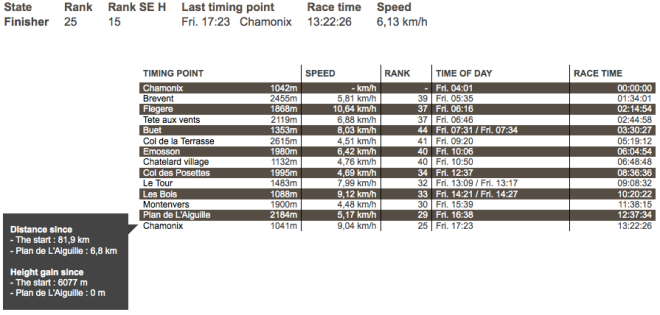
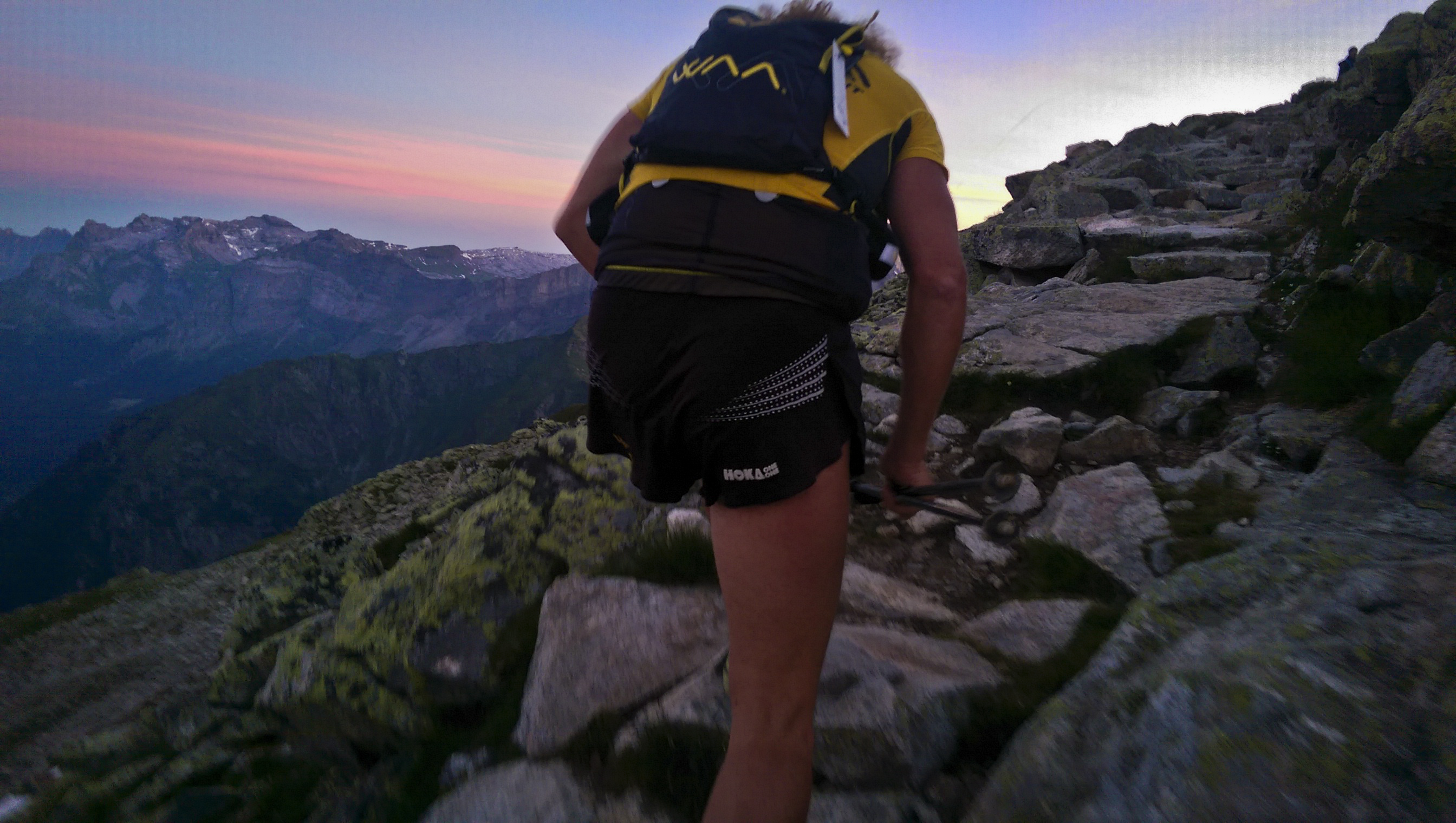
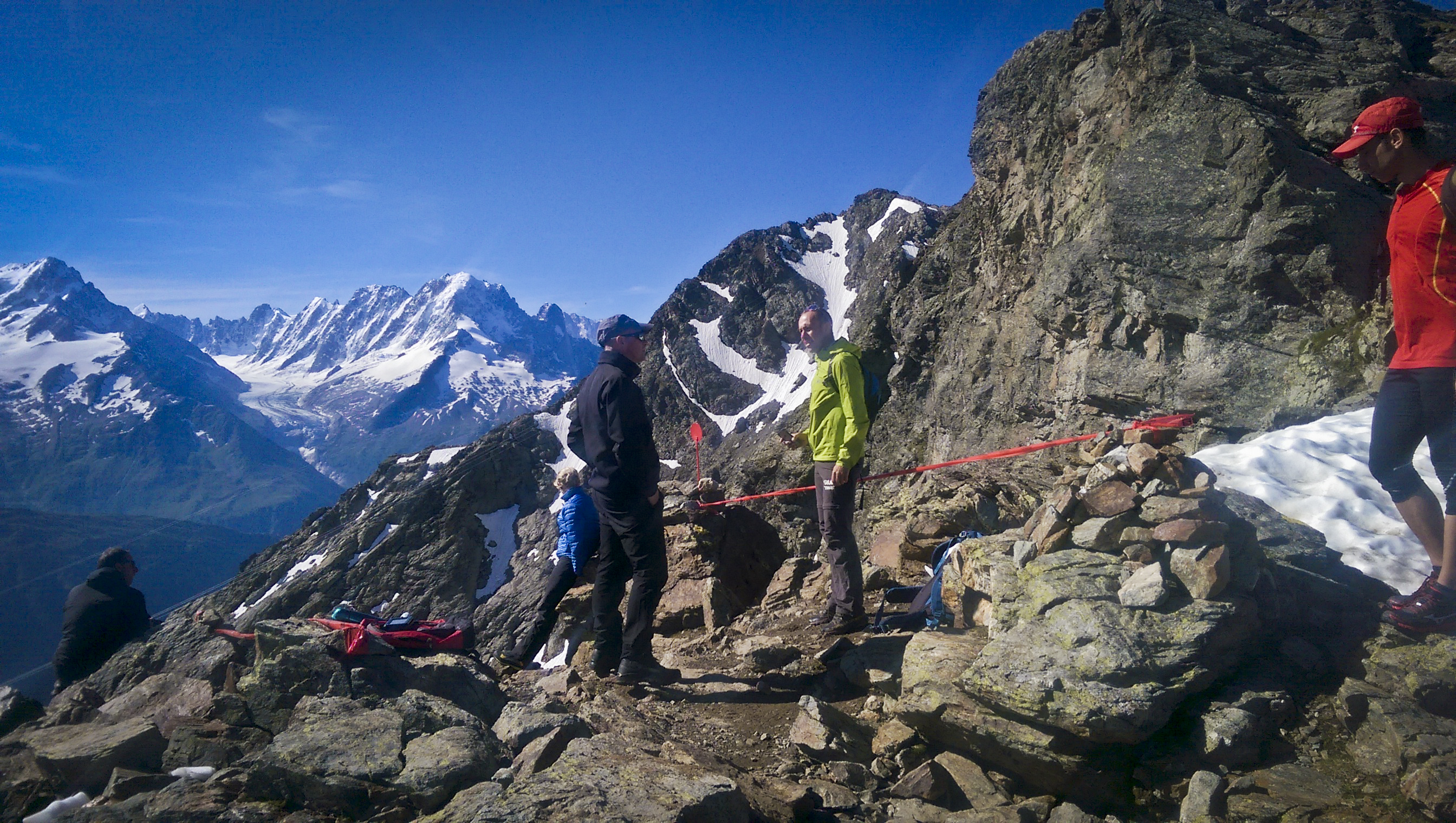
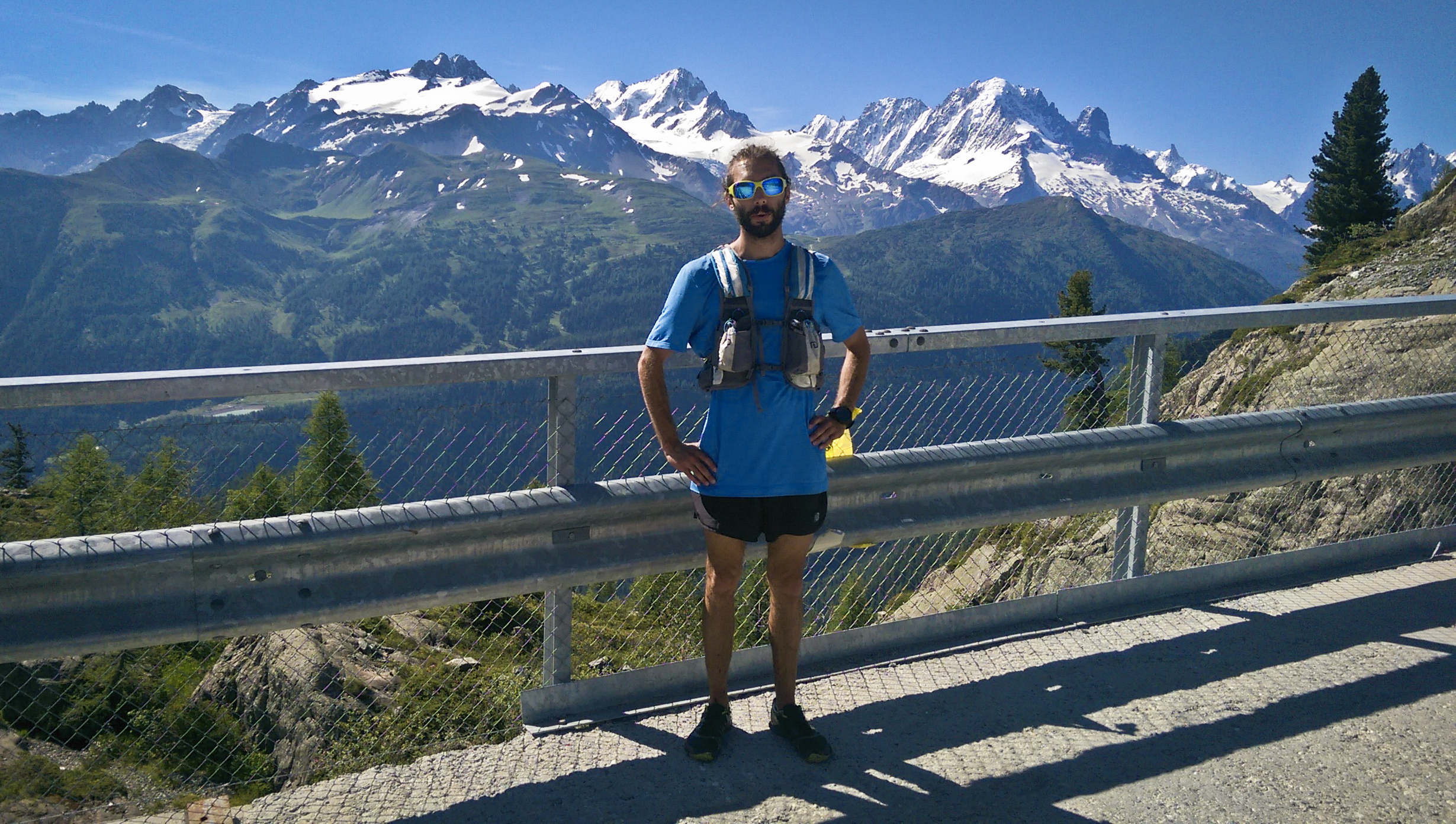
tom mbmOn Friday, June 26, 2015, two alarms woke me simultaneously at 2:30am. Though I was tired and had only slept a few hours, I forced myself out of bed, brewed up some espresso and started sawing a baguette in half. I emptied a package of salt into a glass of clementine juice and drank it. Just after three, I clicked on my headlamp and headed out for a jog. I shuffled along deserted streets, past the normally bustling Aiguille du Midi cablecar terminal and up a dim path that would be the same final metres I would spend on trail in what would be a thirteen hour day.

C’est le Mont Blanc 80K, et je suis stoked.

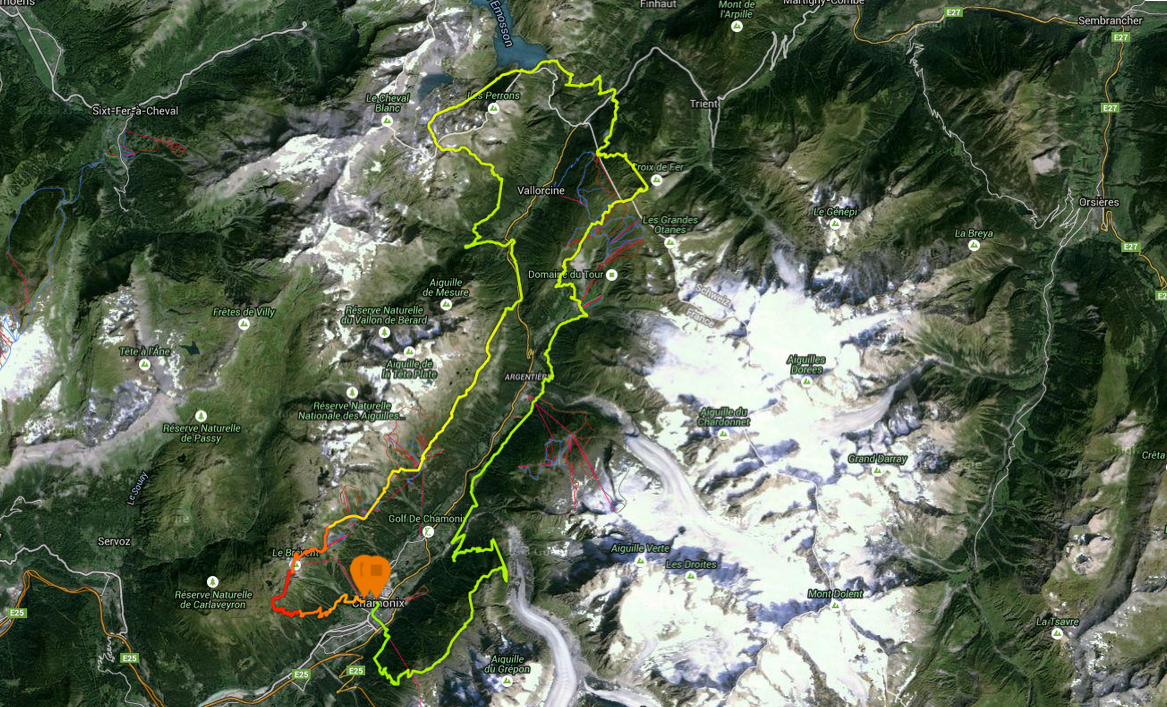
Since CCC last year I’d wanted to return to Chamonix and apply the lessons I’d learnt in that race to another one with the intention of performing and placing better. For months leading up to this race I’d been training on Sulphur Mountain in Banff, doing 900m vertical repeats, faster and faster, to prepare myself for the task of climbing big hills again and again and again.
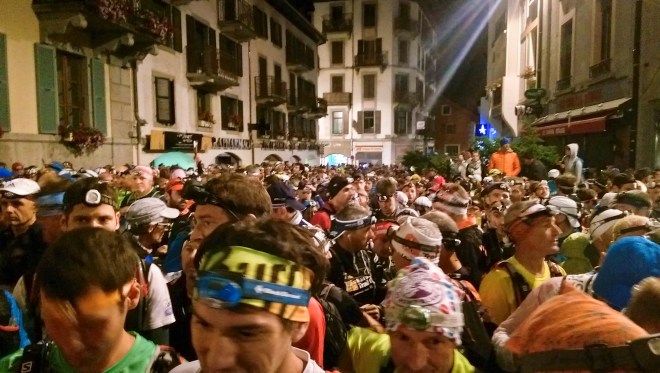
1The race began with a short uphill sprint on pavement before funneling everyone onto narrow singletrack. Knowing that once we left the streets and hit the trail each runner would more or less be locked into position until we reached the top of the first climb, I wanted to get in front of as many people as possible as early as I could. It was my aim to avoid a repeat of my race last year when I waited in line for three hours to climb a hill that should have only taken one.

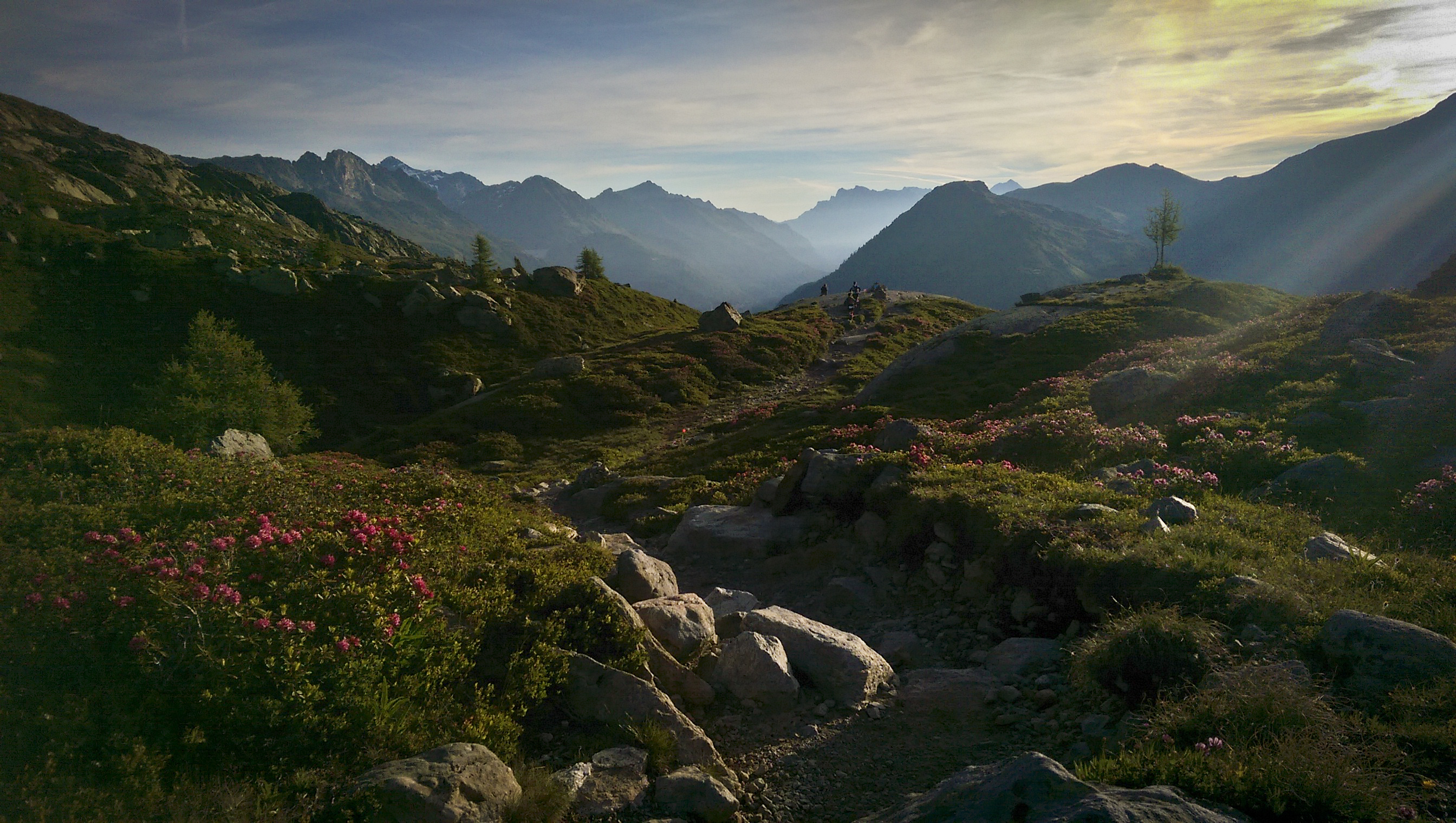
The sprint up Les Moussoux was smooth and I managed to pass a number of people without exerting myself too much. We soon funneled into positions that we would hold until the top of Brevent, my face nearly buried in the heels of the sneakers in front of me as we plodded up the path. After about an hour, the first runners breached treeline. A kaleidoscopic sunrise filled the sky, spilling pastel shades across the face of Mont Blanc and allowing us to stow our headlamps. One hour of headlamp running, not too shabby, I thought, hoping I wouldn’t have to use it again.
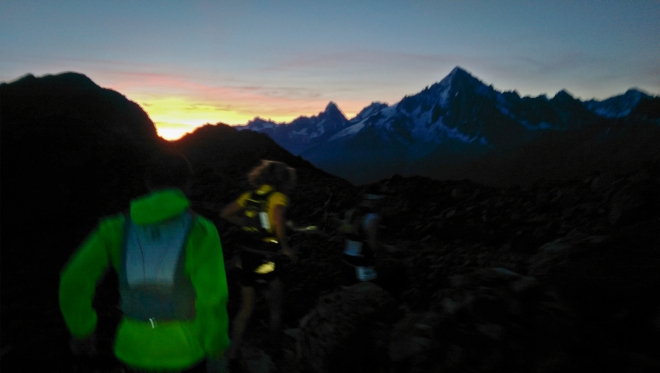
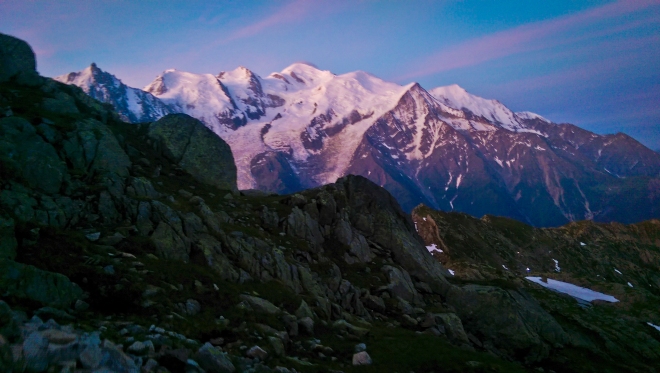
2 3 6 After topping out on Brevent, we skidded through lingering snow and heavy choss littering the descent to Planpraz. I ran straight through this aid station without stopping, continuing my traverse across the Aiguilles Rouges uninterrupted. I had plenty of food which I intended to consume while running, so I wouldn’t need to stop until Buet at Km 26. The run across Brevent was fun and descending the precarious stone staircase to Col des Montets brought back memories of stumbling up this nearly third-class pitch in the middle of the night — cold, wet and miserable — during CCC last year. 10I pulled into Buet at Km 26, not so much to eat but to poop, which I didn’t successfully accomplish. While waiting for the outhouse, however, I managed to eat one small sandwich which was probably practical for the slog ahead. I waited about two minutes until I’d finished my sandwich, then said screw it and left the aid station.
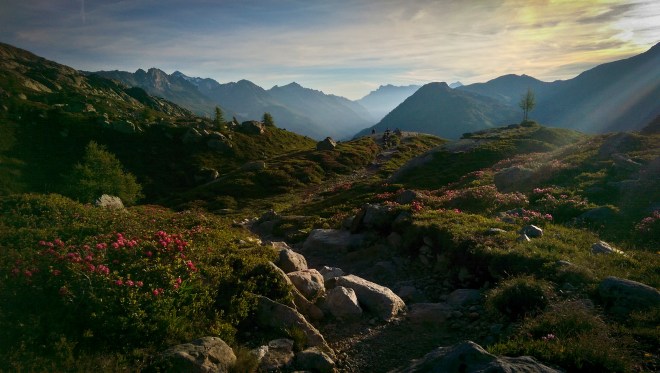
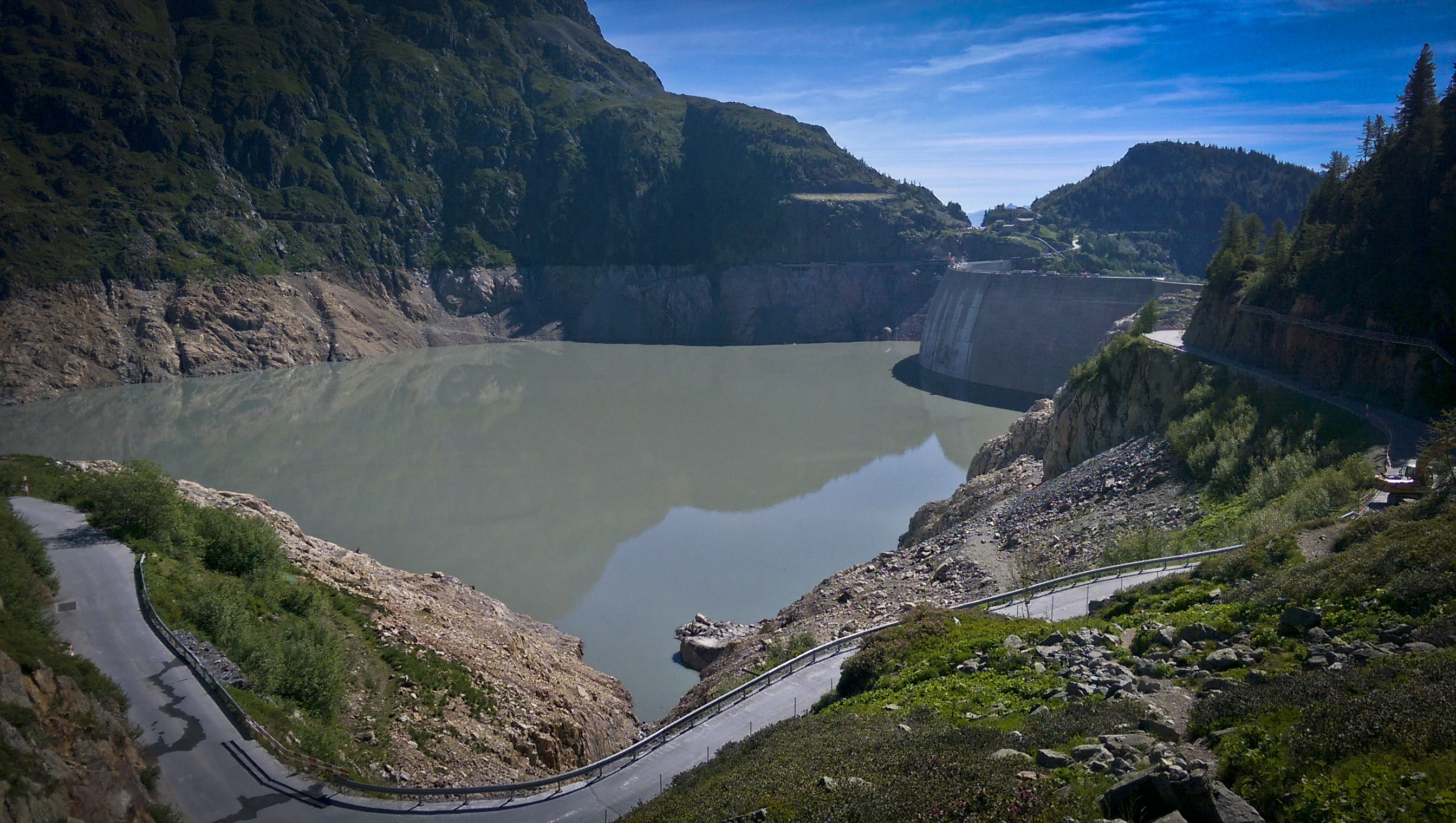
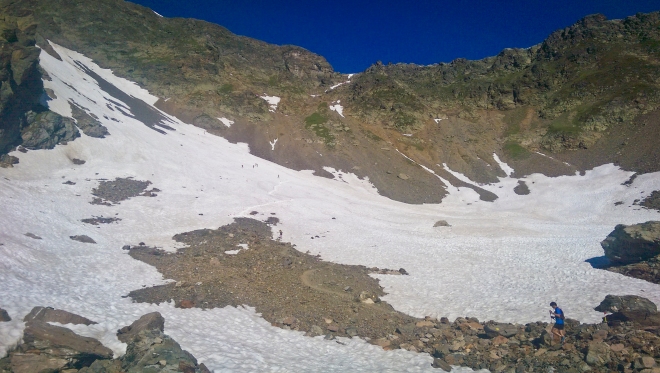
So began the second big climb of the day to Col de la Terrasse, thirteen hundred vertical metres above us, then a descent into the snowy basin that drains into Emosson Lake. Out of the many challenges we faced during this race, I’m sure this section stands out for many runners as one of the toughest, with the added perk of being followed immediately by one of the funnest.
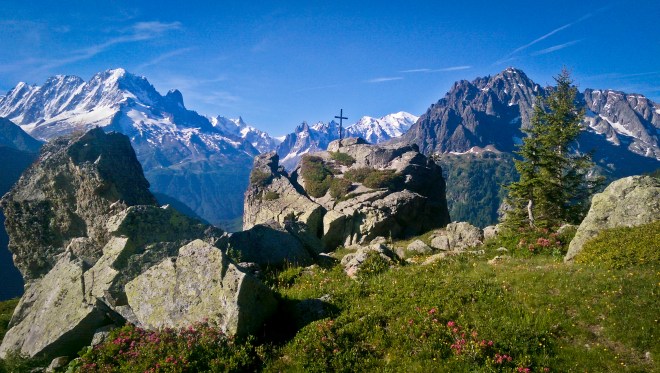
11The ascent began innocently. Gentle switchbacks meandered up the hillside amid a lush and pretty forest. I came upon a pinecone-rich area, gathered some in my arms and achieved in thirty seconds what I’d waited two minutes at Buet to do. I continued slogging and thought I had a good pace until first- and second-place female finishers, Mira Rai and Hillary Allen jogged past and I hissed, “How the fuck… are these girls running… up this hill… right now?!”

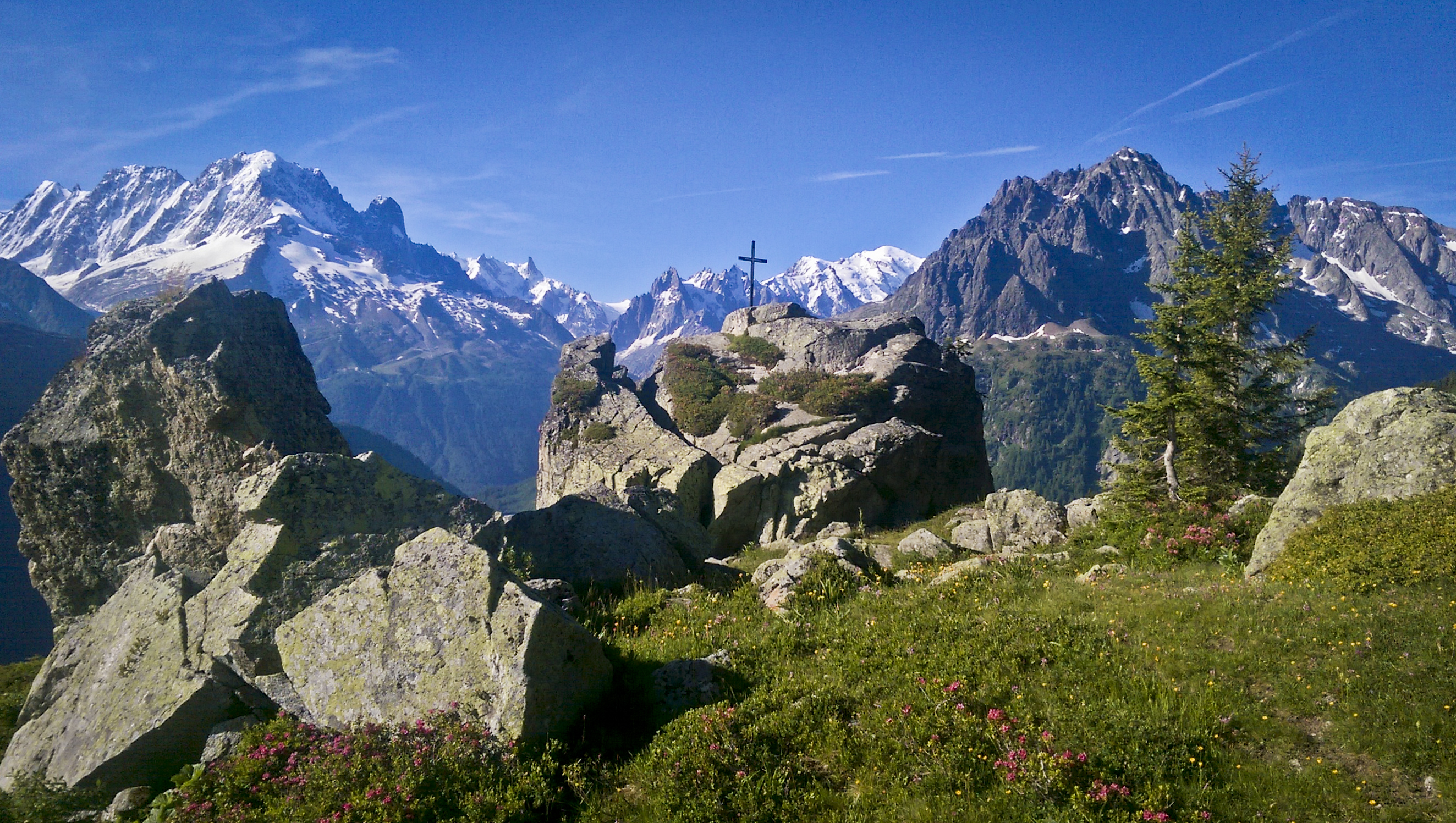
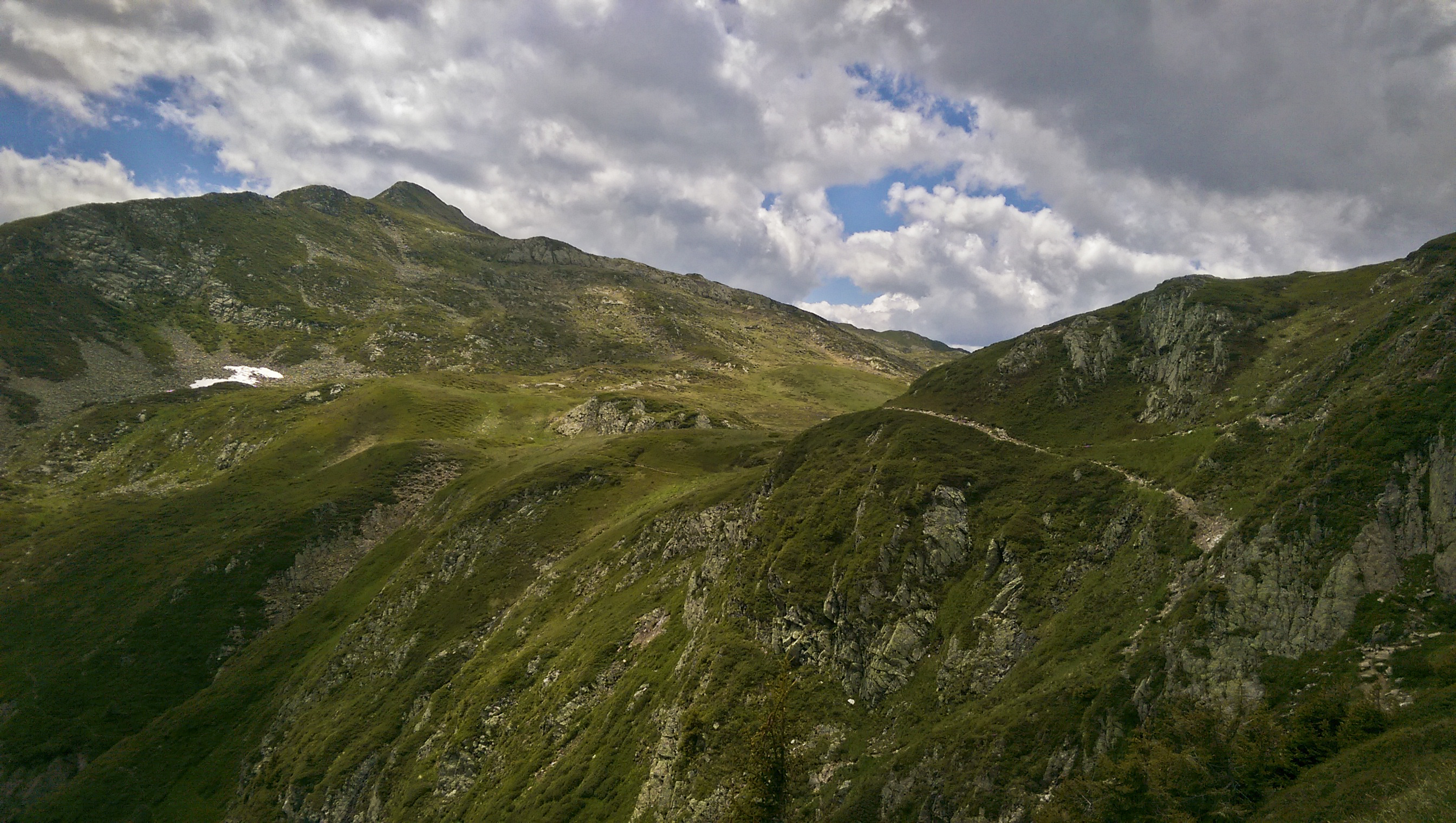
When we broke out of treeline, the scenery became incredible, with epic views of the Aiguille Verte and Mont Blanc looming behind us. The wide switchbacks started to narrow and snake up the scree of a giant bowl towards a rocky saddle high above us. Churning through scree in my sneakers, in the blistering heat of the sun — my specialty, I said.
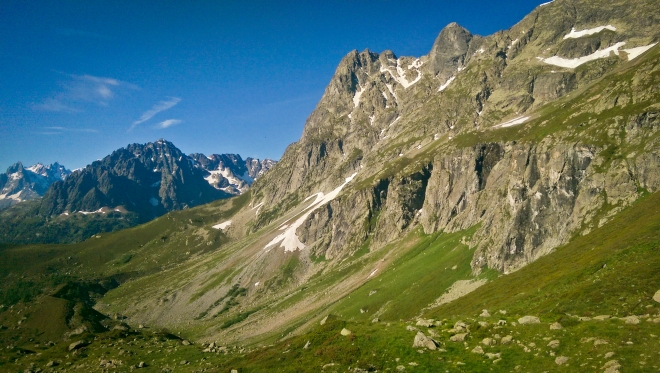
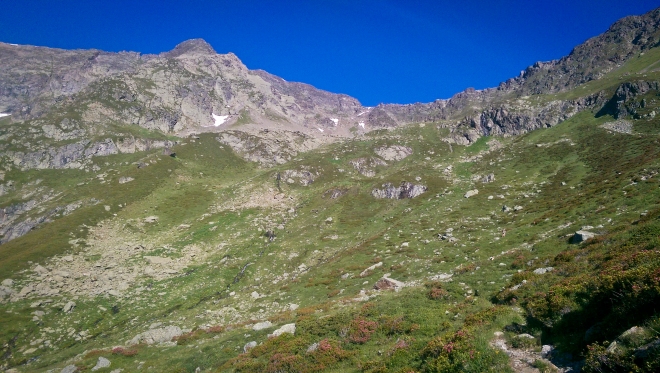
12 13It is often said that ultrarunning isn’t much of a spectator sport, and to the race volunteers atop 2600m Col de la Terrasse we must have looked like racing snails struggling through the dirt then freezing once we hit the snow. However, I felt like the fastest snail in our little snail arena as I picked off runners staggering, debilitated by the heat, the steepness and sustainedness of this climb.

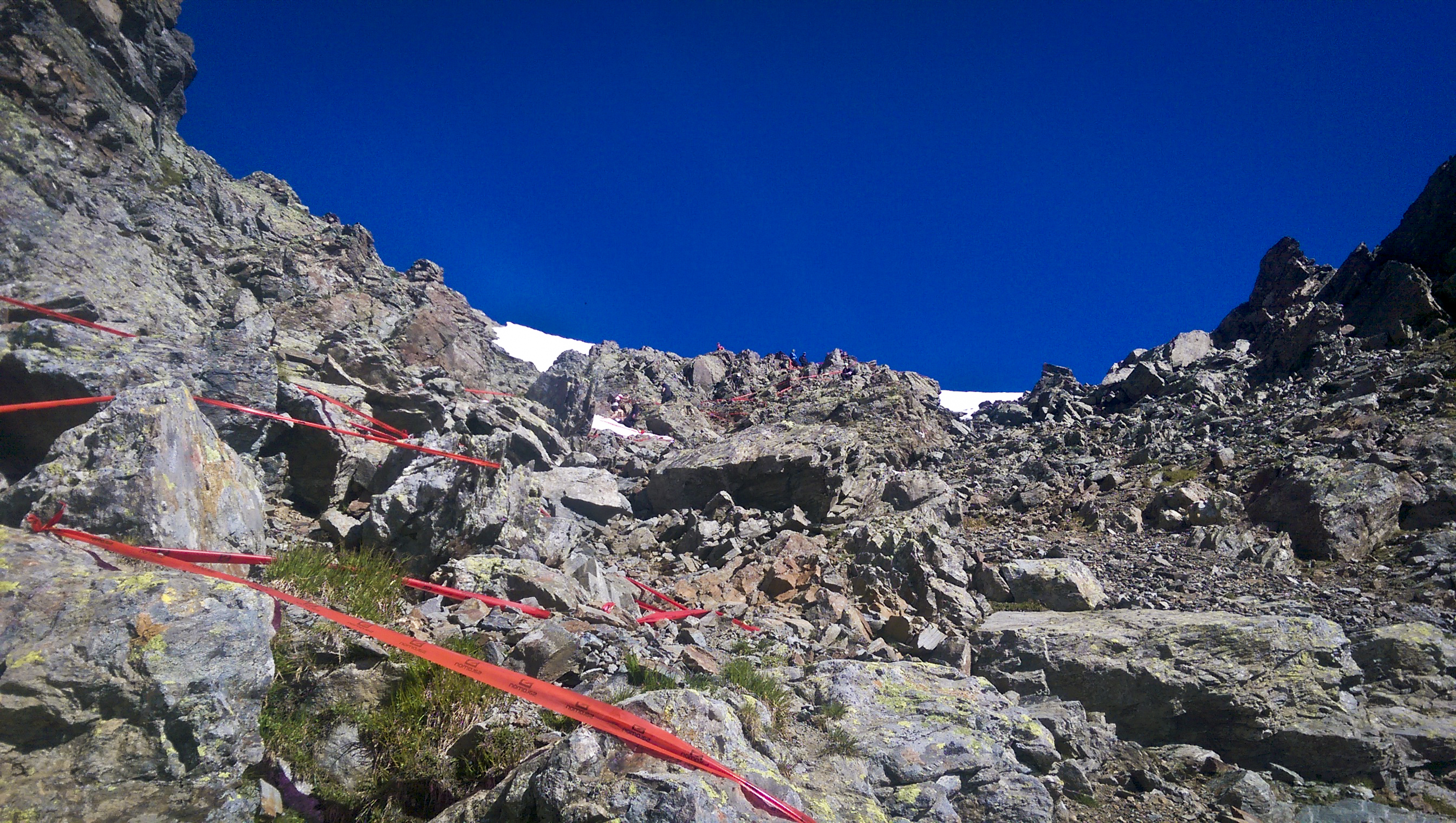
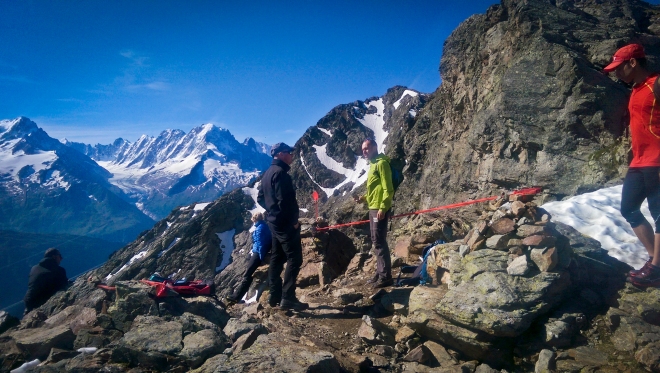
Our paces were slow to begin with but all became slightly slower once we hit a ramp of snow leading up to a notch in the col where immense steps had been chopped, making our task of climbing it much easier. The terrain at the top of the pass was practically scrambling and we relied on arms and handholds to support us through loose rock as wobbly legs couldn’t be trusted on this section alone. The safest route through the final scramble was very deliberately marked as a fall in this area could possibly mean breaking a bone or potentially worse.
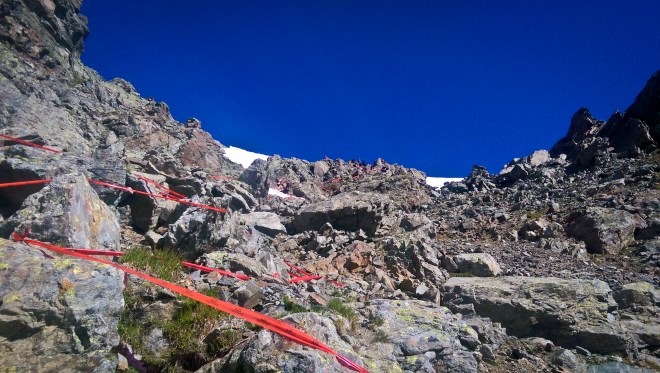
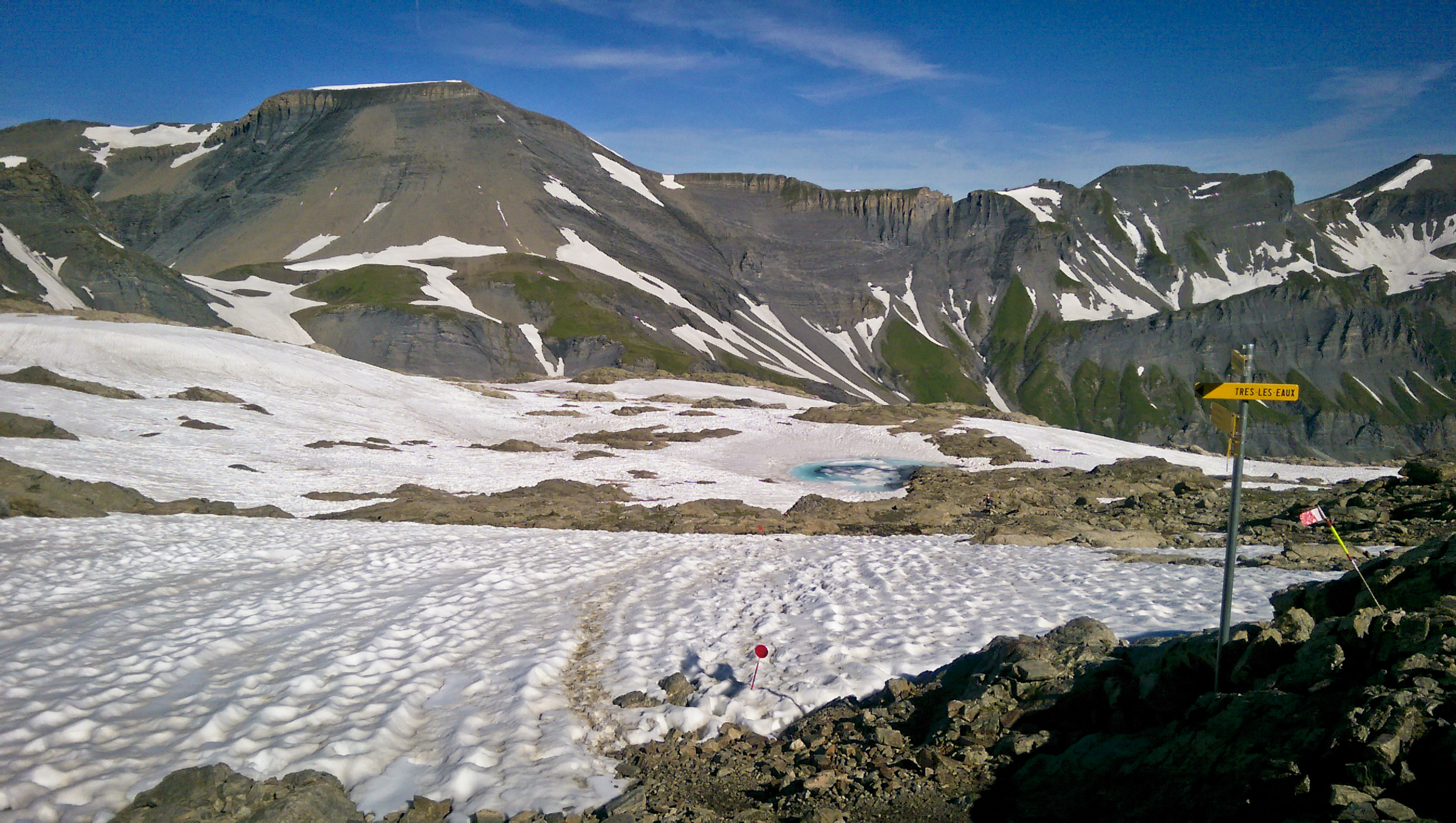
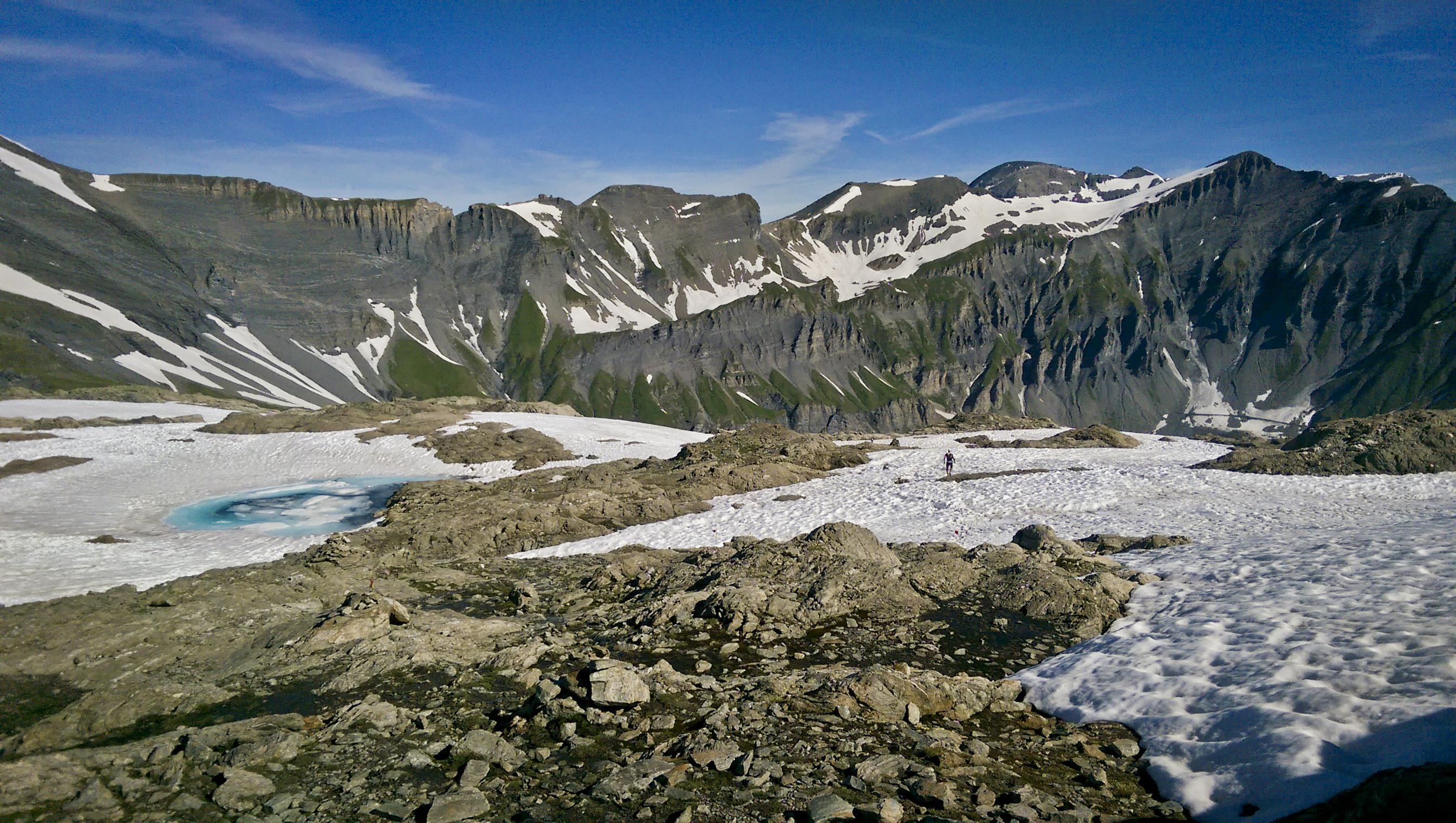
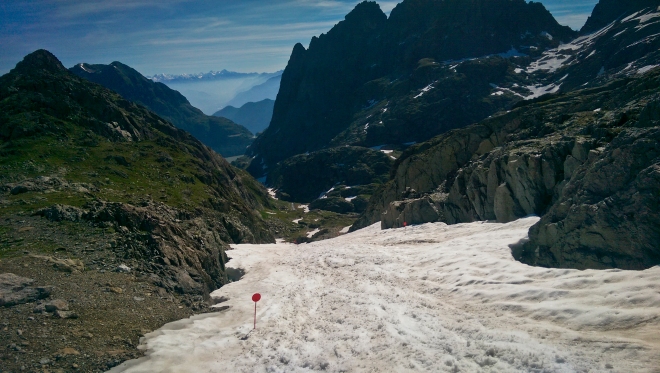
14 16I reached the top of Col de la Terrasse at 9:20am, five and a half hours into the race, astounded by the technicality of the last section, more akin to a scramble in the Rockies than what a “marathon” suggests. Nevertheless, I was now standing astride the rim of vast snowy plateau punctuated by turquoise meltwater ponds and veined by ribs of rock. The idea of this being a “trail running” race had now been thrown out the window: first I had to climb a series of rocky ledges with my hands; now I was about to glissade down a snowfield, most likely not on my feet.
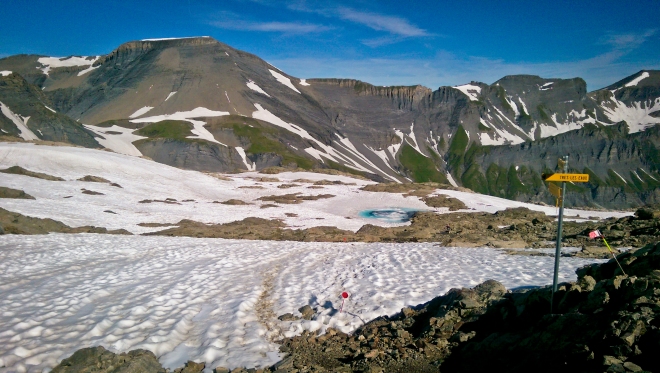
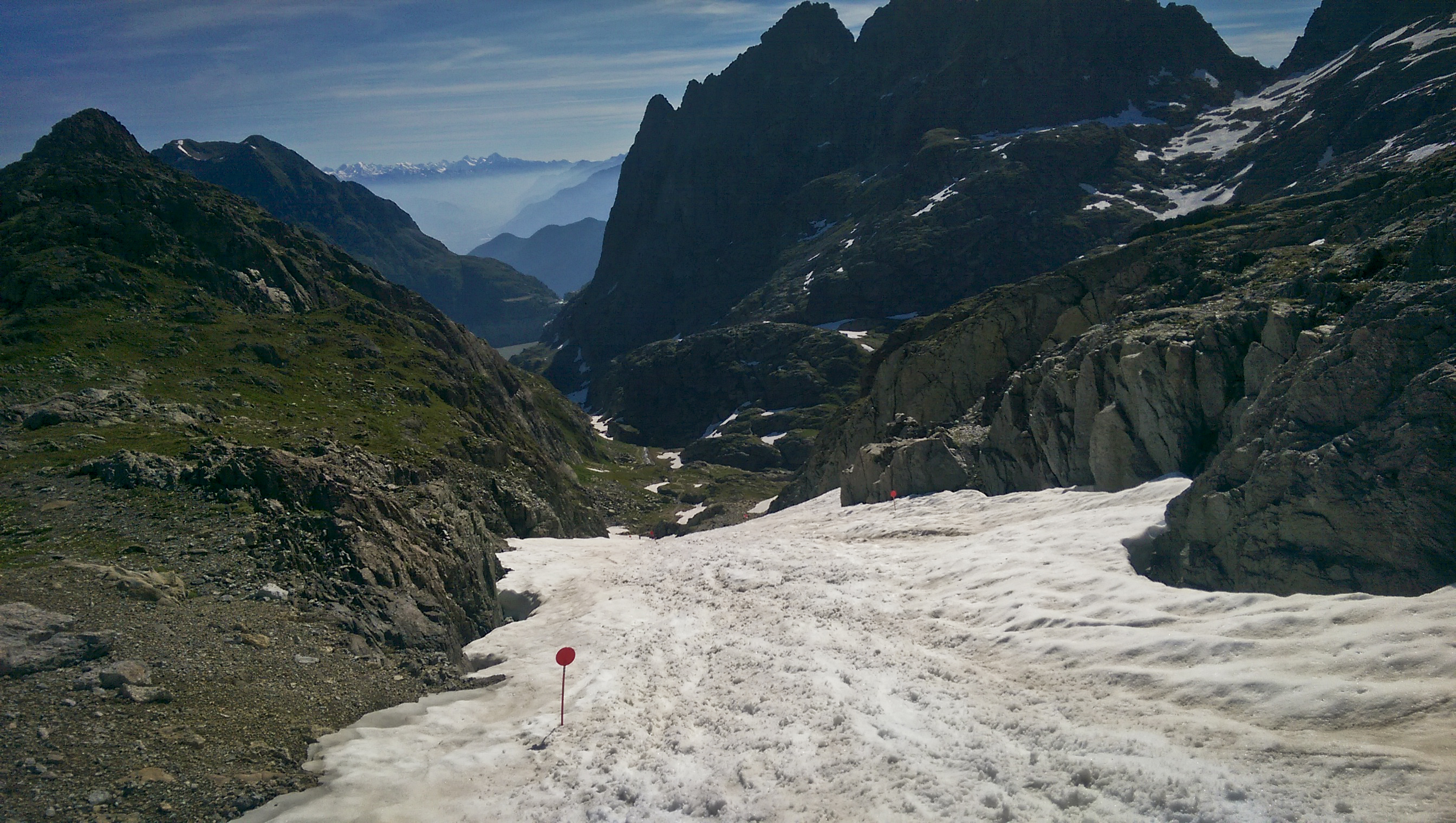
17 18 19The snow was still fairly frozen but a couple inches of slush on top made all of us look a bit clumsy and uncoordinated. I galloped through trenches in the snowpack and skipped along bare stone until everything got channeled into a narrow gorge, like a black hole drawing runners down the slope, careening and sliding with increasing velocity and little degree of control.
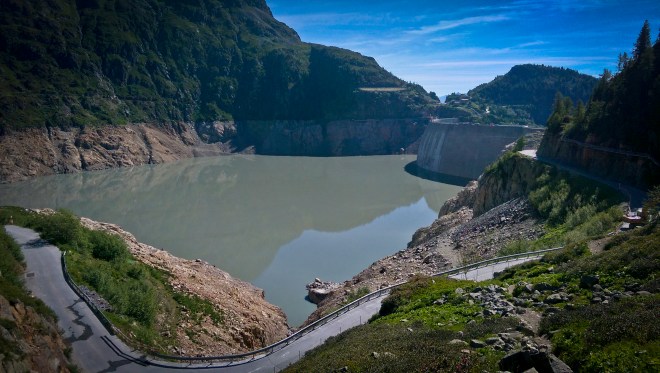
20A short bit of downhill jogging soon brought us across Emosson Dam to the aid station which marked the halfway point in the race. I mistakenly filled my bottles with carbonated water (gross), munched another mini sandwich and put in headphones to propel me down the perilous chamois path that comprised the descent from Emosson Dam to Chatelard.
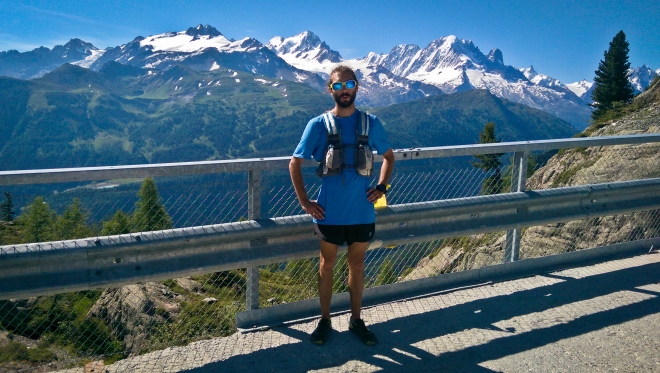
21 23 24I felt like Kilian descending the fucking Matterhorn on the few short pitches where chains and cables were installed for assistance and here I thought to myself, this isn’t a “running” race at all, even on the downhills. The form of locomotion required to move swiftly through this kind of terrain and not tumble resembles, but can hardly be called, “running”. “Goating”, let’s call it.

As I tore through the ski chalet shanty town inbound to Chatelard, a Frenchman shouted at me: “Quarante!” he said. I stopped and said, “Huh?”

“Quar-ante,” he repeated, then signed with his fingers, “Four, Zero”

I got my gear inspected at Chatelard then skipped the snacks to hustle away and secure my forthieth position. The next climb to 2000m Col des Posettes abruptly reared up in front of me and I laid hands to knees and slogged, stopping briefly for water midway, then continuing into the alpine, passing a couple dudes in the process. I began to gain ground on a runner dressed in red whose pace I matched very closely, mine only a little quicker over many hundreds of metres. This runner, Etienne and I would play leapfrog throughout the last forty kilometres of the race, losing and catching each other during our alternating high and low points, strengths and weaknesses on the course.

It was good that we happened to be together once we hit the rolling stretch from Le Tour to Les Bois, otherwise I would never have run it so quickly. Flat terrain isn’t really my jam. This was actually the tamest part of the course, and Etienne pulled ahead, able to maintain a pace my clumsy gait couldn’t support.

I jogged into Les Bois and went for some fruit as Etienne left with a gentle wave. One banana and a half later, I left the aid station amid cheers of “Run, Canada!” and prepared to take on the last big climb of the day to Montenvers overlooking the Mer de Glace.

Cue heatwaves, a desert scene, tumbleweeds, parched bones baking in the sun. Demoralized runners were splayed on the sides of the trail like casualties of war. I remember little about this final ascent besides chugging along on autopilot; painstakingly walking up grades normally easy to jog; repeatedly wiping sweat out of my eyes and wondering when I was going to develop some sort of serious heat illness, convulsing and shivering on the mountainside. All I wanted was to see that goddamn hotel, Montenvers, and thought I would never make it, until suddenly I popped out among gangs of tourists with their mouths agape snapping pictures of the Mer de Glace.

Yay! I had done it, I’d reached the top of the last hill without dying yet still had twenty kilometres left to traverse over rugged, undulating terrain, then had to plummet a vertical kilometre straight down to Chamonix. I pulled into the aid station, it was sandwich time. After a few minutes basking in the cool, shaded brick of Montenvers, I was off, en route to Plan de l’Aiguille.

Compared to the rest of the course, the run across the huge flat stones of the Balcon Nord was easy going and made easier by the prospect almost being done. I pulled up to Plan de l’Aiguille and mimed to the ladies manning the aid tent: “Do we have to go up further?”

No, they said.

“Down now?”I asked.

Yes, they said.

“YES!!!” I exclaimed as I threw myself over the crest of the hill and down the trail towards Chamonix, so far below us it looked like the surface of a planet as seen from space. And here I was about to freefall at terminal velocity from the sky to the earth, trail sneakers screeching.
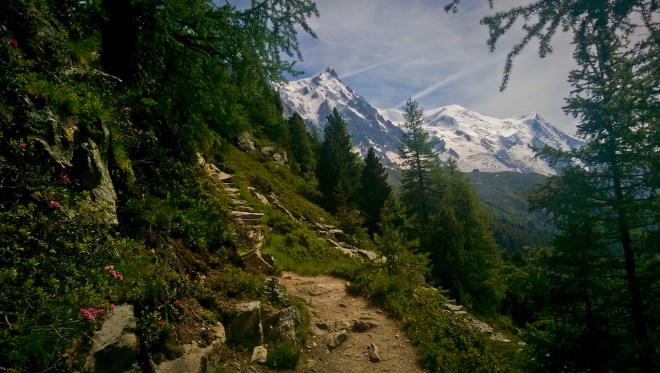
3 I was surprised to catch and pass a couple guys on the final downhill yet another runner dressed in red remained just out of reach, whose speed matched my own almost precisely. This guy is pretty fast, I said, because I thought I was moving pretty fast myself. Over several minutes I struggled to catch Etienne until I was right on his heels: “Don’t worry, it’s me,” I said. “And I don’t want to pass you. You’re going too fast already!”

We finally spotted pavement and remarked how sweet it was to see. Etienne and I bounded out of the forest and off the trail I’d warmed up on thirteen hours earlier onto hard road. Applause came sporadically from random people on the street, then grew consistently as we passed the patios of restaurants and cafes. At last we entered the throngs of people packed into downtown Chamonix, all with the collective aim of watching runners finish, raving and greeting each one like a national hero, like the greatest athlete the world has ever seen.

Etienne and I crossed the finish-line side by side, thirteen hours and twenty-two minutes after departing that very spot. I had done it, I had finished an incredibly demanding race but also achieved what I eventually considered a wildly unrealistic goal of coming in 25th place.
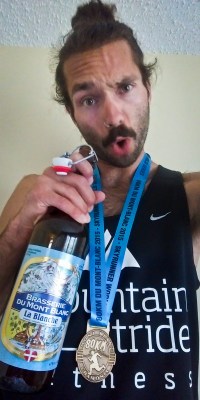
5Last year, in my first foray in European mountain racing, I ran 101km on similar terrain and took twenty-one hours to do it, running all night and finishing in the dawn of a new day. After the pain from that race faded I vowed to try again, and hopefully not take as long as I did the first time.

Now here I was, filthy and barely clothed, sprawled on a sidewalk in Chamonix with sweaty running equipment scattered around me, nursing a cup of warm ale like it was nectar from heaven.

Like my experience in CCC, I’d occasionally entertained the idea of dropping out during this race but there was never any legitimate reason to do so. Sure, the task was difficult, tiring, hot and painfully tedious, but my body had shown its ability to chug along without respite. Leading up to this race, the real fruits of my training had become increasingly mental — mystical even. I still aimed to nail specific distances in specific times, but I achieved more by doing less. I moved faster by reducing my resistance to gravity and speed. I became like the mountains metaphysically in order to overcome them on foot.

Greatest of all was the feeling of having built something of quality, from limited background or resources, mostly curiosity about my abilities and deepening relationship with my environment.

For now, however, my body was trashed, I didn’t give a shit about the mountains and was curious only about my ability to walk four blocks so I could collapse into bed.
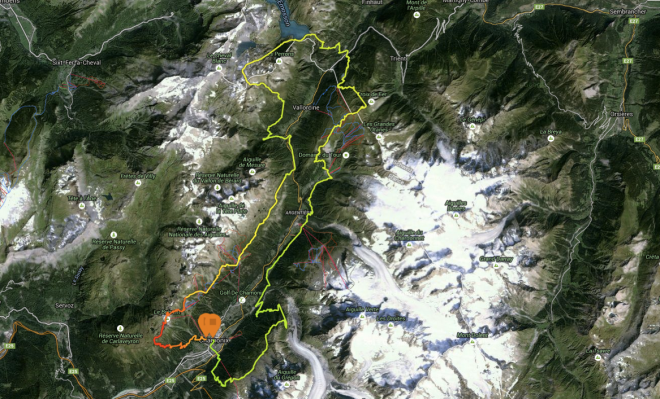
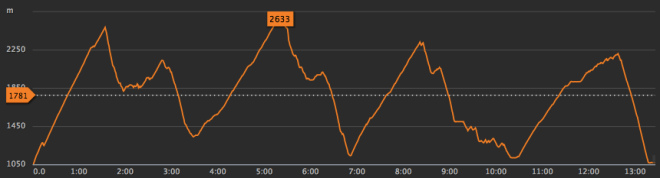
Screen shot 2015-07-07 at 11.35.56 PM Screen shot 2015-07-07 at 11.37.07 PM Screen shot 2015-07-07 at 11.37.41 PMScreen shot 2015-07-08 at 10.04.27 PM
Peep Movescount data for this trip here.

Peep livetrail.net data for this trip here.

Race Report: Mont Blanc 80KM 2015

Scree of Chamonix – June 20-25

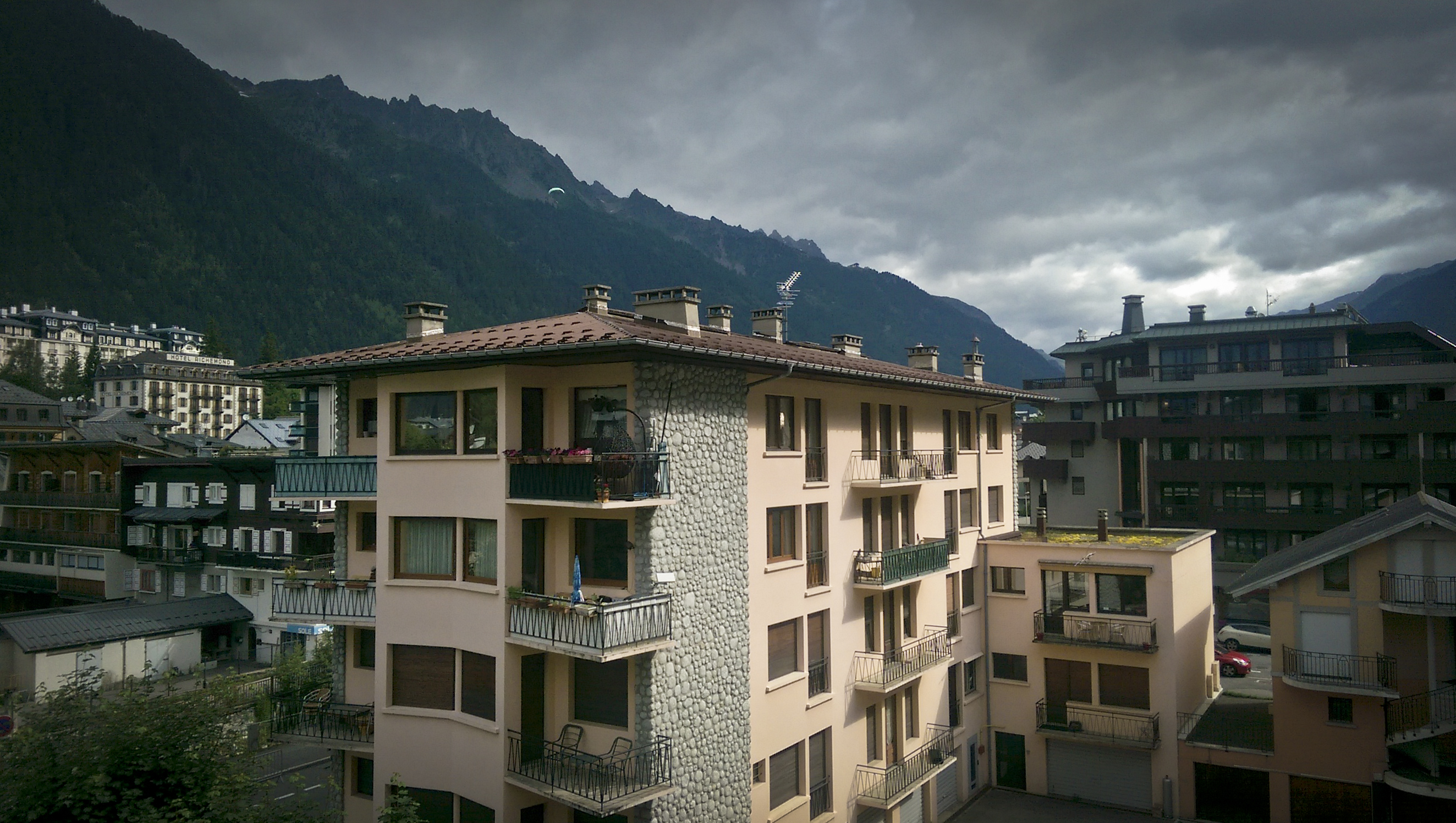
14 aka gigglesI’m wandering back and forth in the French Sector of Geneva Airport, searching for the shuttle company that’s supposed to take me to Chamonix. There’s little time to waste — the moment I set foot inside my rental apartment, I intend to strip down, don running clothes, and dash off into the mountains without a care in the world. At last I find my shuttle (not in the French Sector at all), and we are on our way, flying along at nearly mach one-hundred in our minivan on the highway surrounded by bigger and bigger mountains. That is, until the biggest one of all comes into view, like a gigantic dollop of melted vanilla icecream hovering above rows of black, craggy pinnacles. I gasp: “Le Mont Blanc!

Cham is always a flurry of sensation and experience: mild culture shock; overpowering mountain scenery; fantastic food; and warm people all generally stoked about alpine sports round out the atmosphere. I intended to climb Mont Blanc via the Gouter within my first or second day in town but fickle weather kept me playing at lower altitudes. One week isn’t enough time to expect to summit Mont Blanc — unless you get a perfect weather window early in the week — and then rest sufficiently for a demanding ultra a matter of days afterwards.

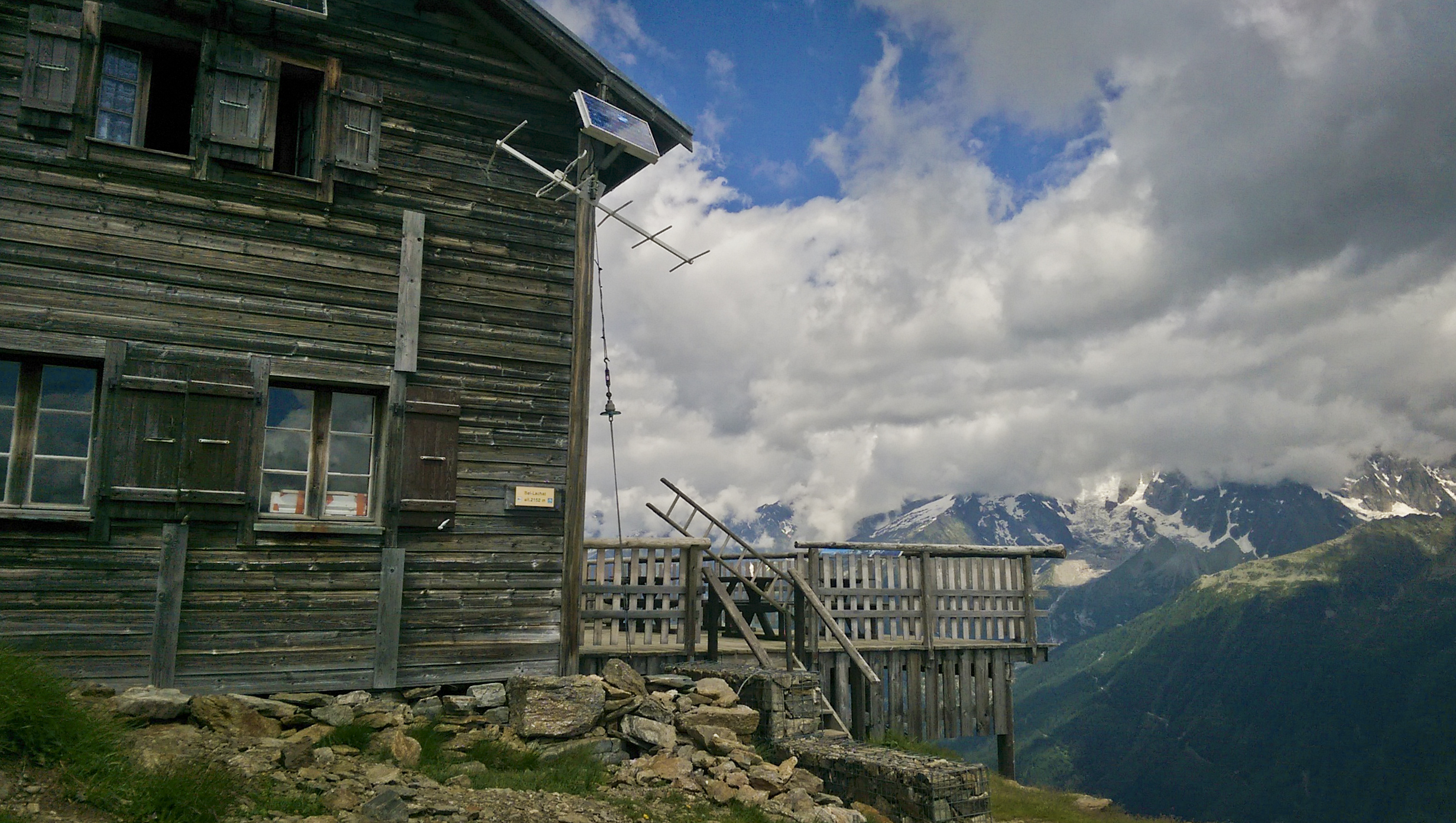
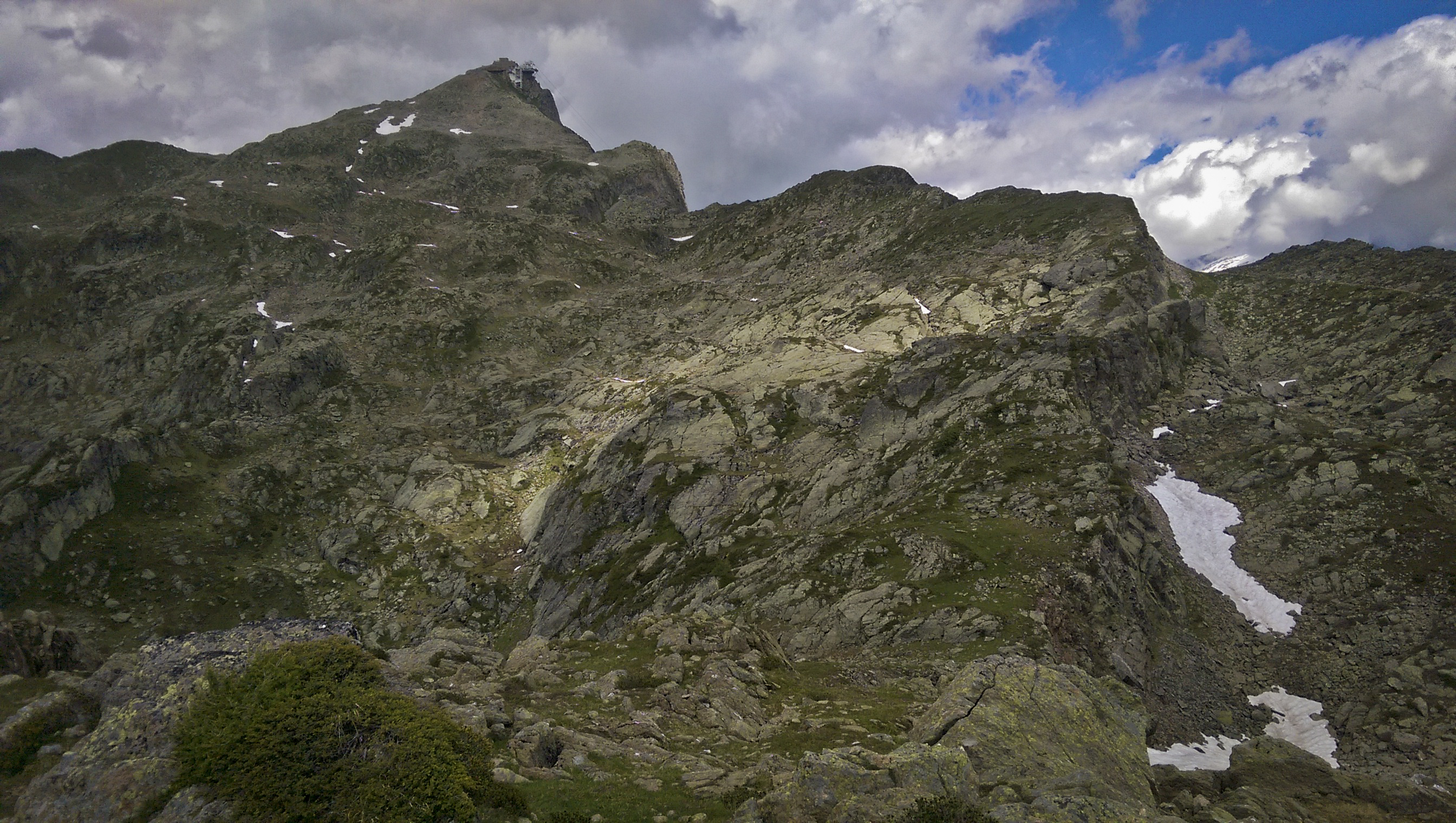
The moment I arrived (June 20), I sprinted up the hill to check out the first climb of the Mont Blanc 80K. The race begins in town, climbs steeply on pavement for ~5min, then funnels onto tight singletrack that switchbacks past the refuge of Bel Lachat to the summit of Brevent. I knew from my race last year that I didn’t want to get stuck behind a bunch of people, so I realized that if I could move quickly for five minutes at the start of this race, I’d secure a good position and be able to cruise uncontested for another hour until we reached the top of Brevent.

One notable episode of this run was crossing paths with a burly boucton (ibex), who I addressed in the same manner I communicate with Canadian goats and sheep — by blahhht-ing like a sheep at them. He simply snorted in response. Stuck-up French goats… I descended to Planpraz via the Mont Blanc Marathon route, then back to town underneath the gondi line. Woo! (2h56m/18km/1412m)

3 4 5 6 7 8 10 Screen shot 2015-07-02 at 5.49.09 PM 11 12Day two (June 21), I flirted with ideas of trying to bag Mont Blanc or Mont Buet but the weather appeared rather poopy when I opened my eyes and looked out the window. I didn’t really feel like taking the bus anywhere either, so I just headed out the door intending to slog up to the famous Mer de Glace lookout at Montenvers, then scope out the final part of the course.

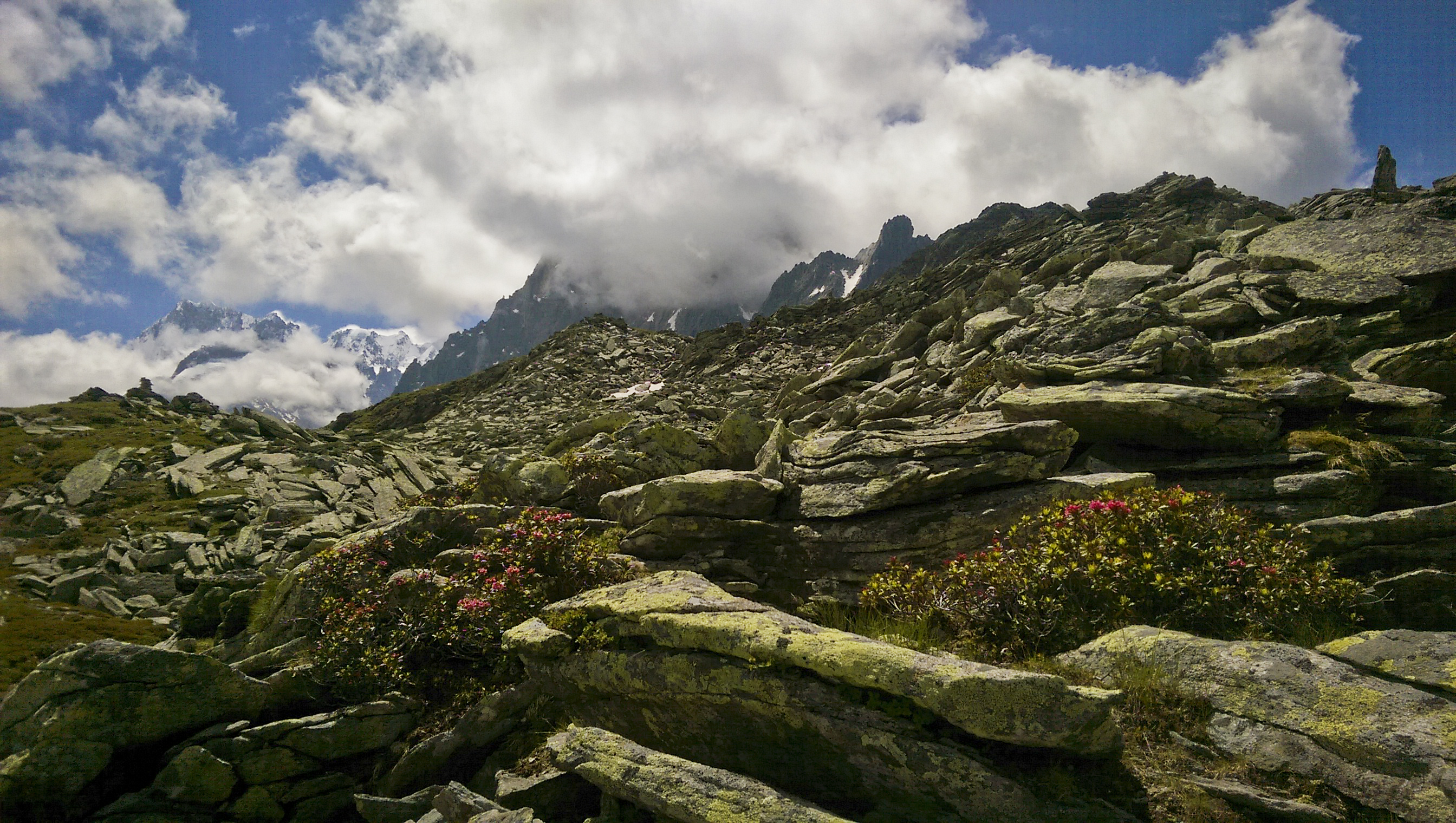
My hike up to Montenvers was hot and sweaty and I greeted the cool breeze of the Mer de Glace glacier with arms outstretched. I promptly bagged Signal Forbes — at least the part where all the people stop and take pictures — looked around and said, “what next?” I looked up along the broken ridgeline extending from Signal Forbes toward l’Aiguille de l’M and started scrambling. It was very pleasant scampering up huge plates which stayed in place as I hopped and leapt between them, and offered texture via their coating of lichen. Once I reached the “summit”, I continued along the exposed ridge for awhile until I wasn’t really comfortable anymore, then headed back.

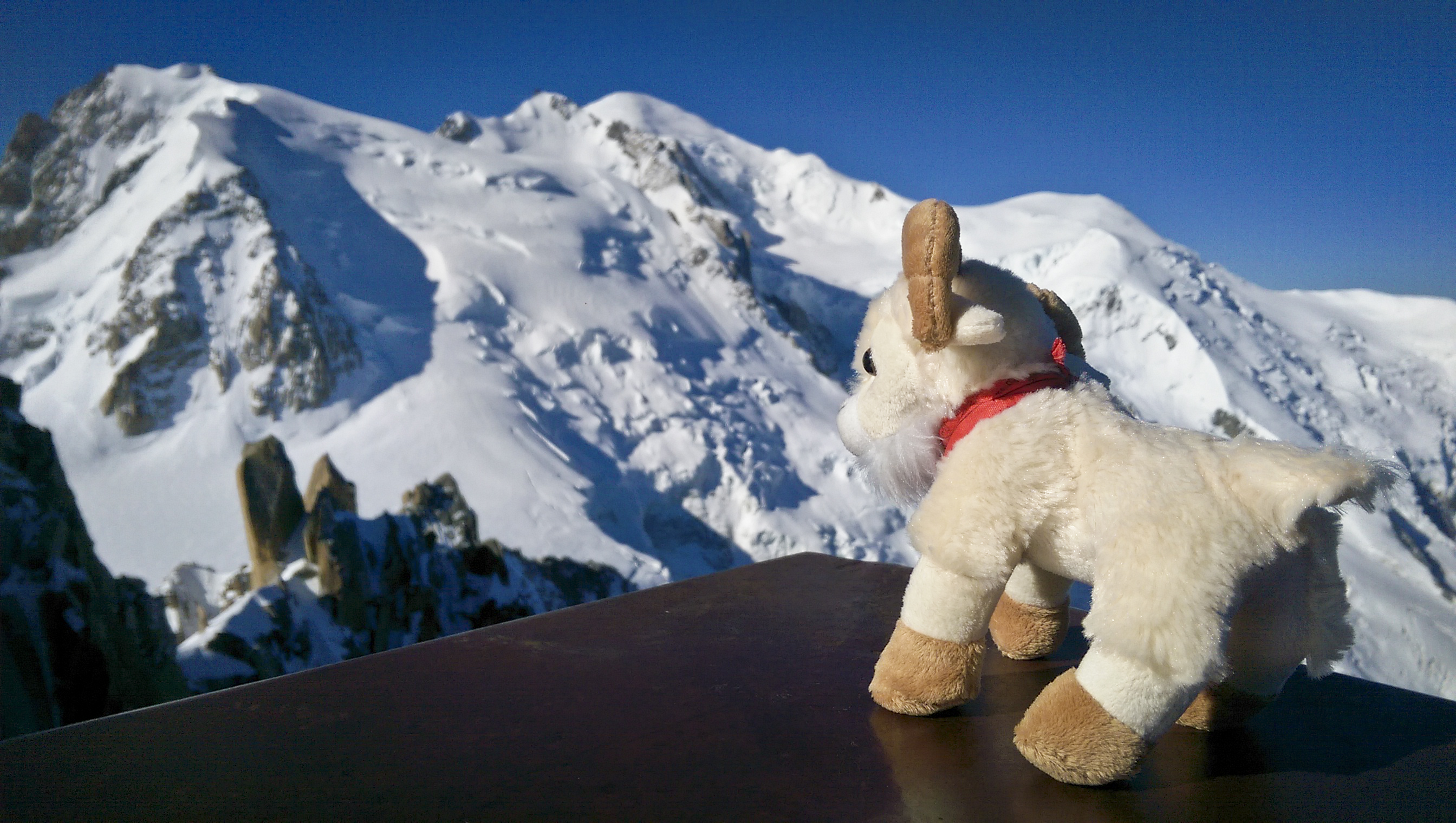
This run marked the introduction of my trail buddy/pet goat, Giggles. After marveling for ages at clouds churning off the knifeblade edge of the Drus, and clearing views of the other Chamonix Aiguilles — Grand Charmoz, Grepon and Aiguille de la Plan — we headed down and across the Balcon Nord beneath these brooding towers to get a feel for the final stretch of the Mont Blanc 80K. A trail constructed from huge, flat stones, I found the Balcon Nord pretty conducive for skipping along at a decent pace to the Aiguille du Midi midway gondola station, slash, final aid station of the race, before dropping like a stone back to Chamonix for the finish.

Giggles and I reached the top of Plan de l’Aiguille and were tempted by warm cafe ou lait and stopped to refuel before descending back to Chamonix. (I imagine this was around 20kms and maybe 1300m of climbing, but I didn’t have my watch charged.)

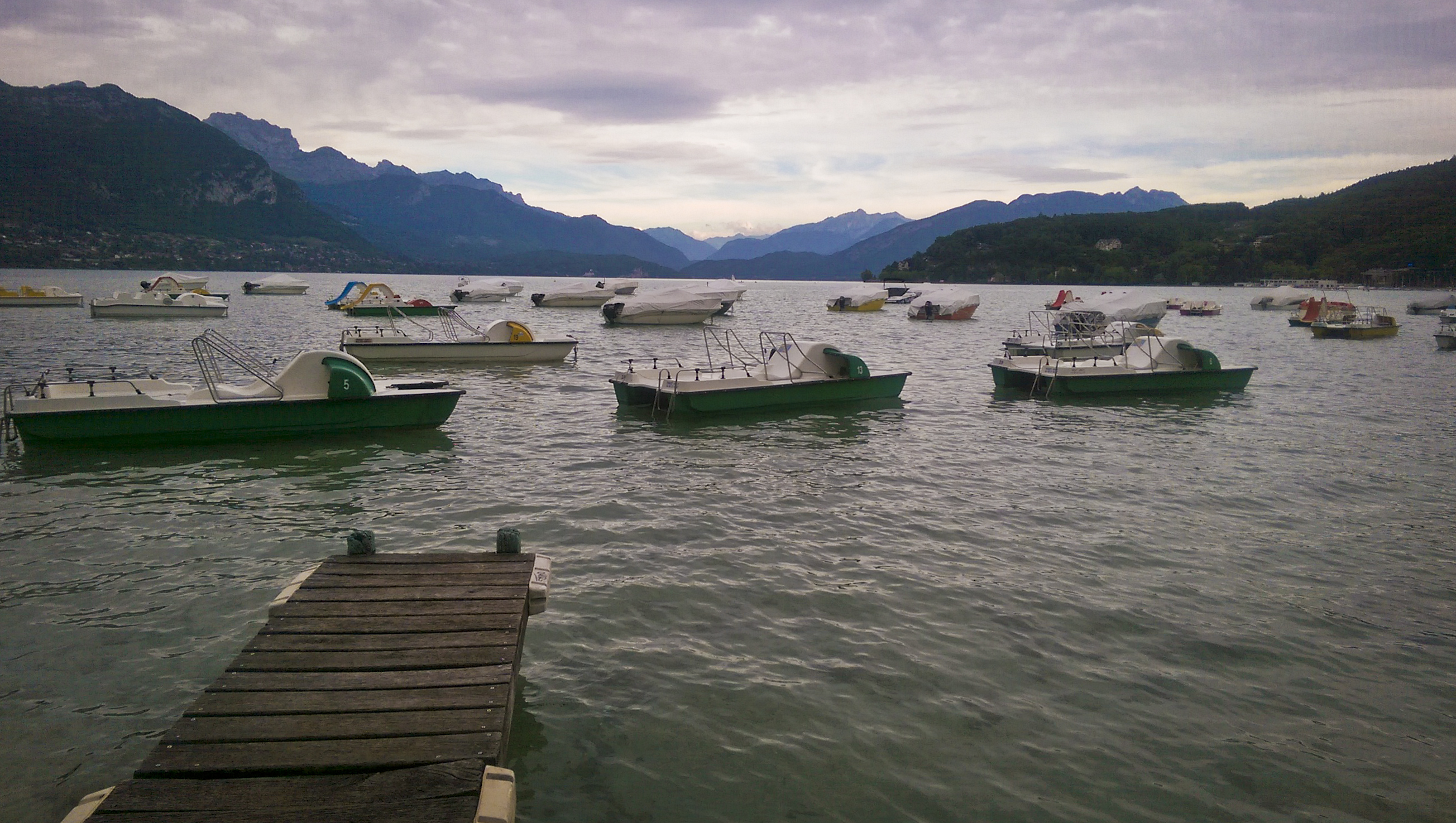
1 2 3 4 5 6 7 9 11 13 15 16 17 18 19 20 21 22My “free time” to bag peaks and such in Chamonix was constrained in a merry way by an appointment to visit two friends I know from Banff. Justine and Marion, two French twins, became acquaintances a couple years ago and we quickly became hiking buddies, poring over maps and shooting shit for hours about places to see in the Canadian Rockies. These girls were crazy about backcountry hiking in Canada, and are two of the most driven and competent peak-baggers I’ve ever met. Though the effort of the previous two days hadn’t seemed too extreme at the time, I woke up on day three (June 22) with legs sore — trashed, even — so my appointment to meet up the girls came at the right time. I caught an early bus to the picturesque ski commune of Megeve, where the girls work, and we tore off on harrowing mountain roads to climb Le Parmelan, a long escarpment overlooking Annecy.

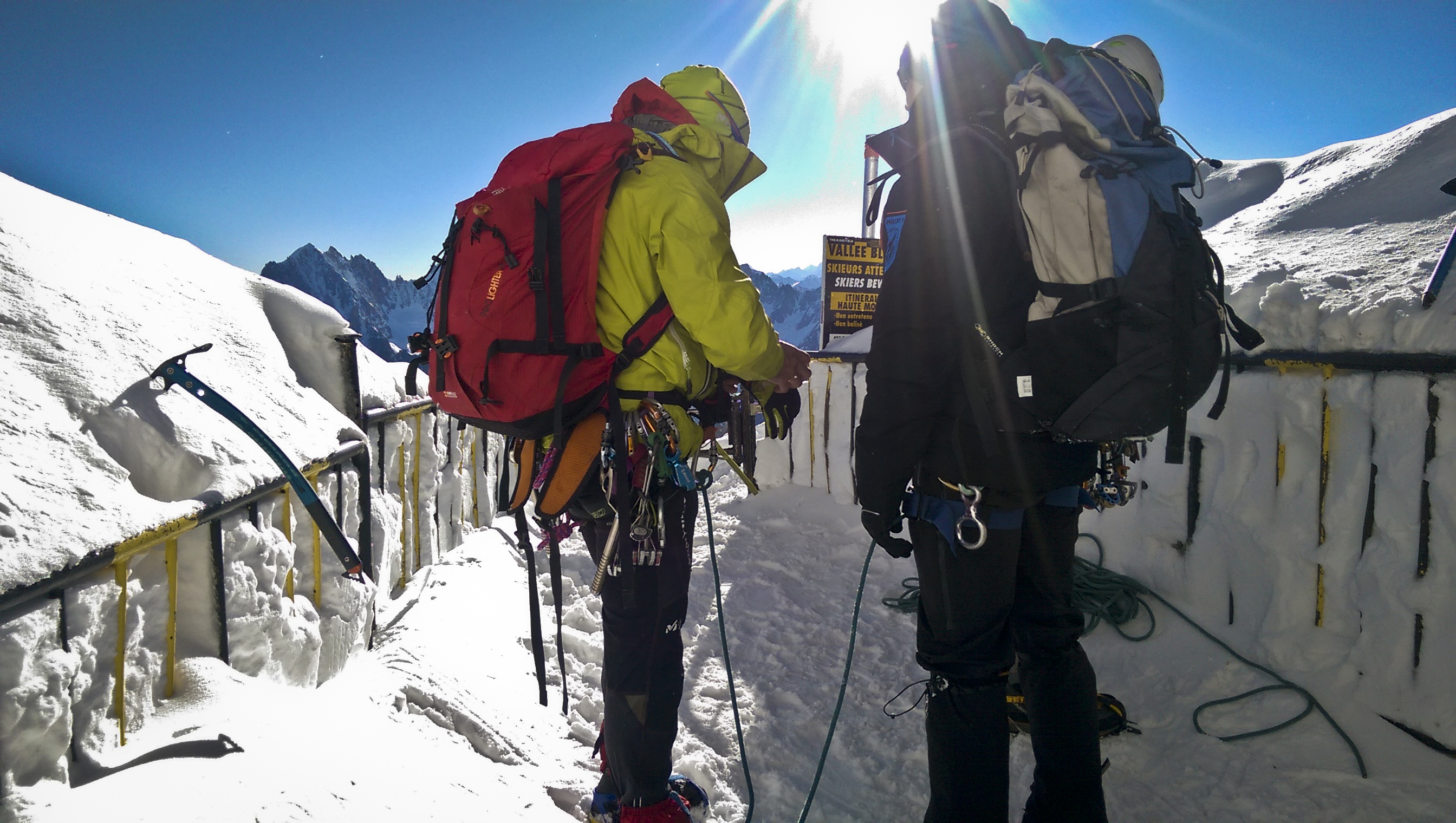
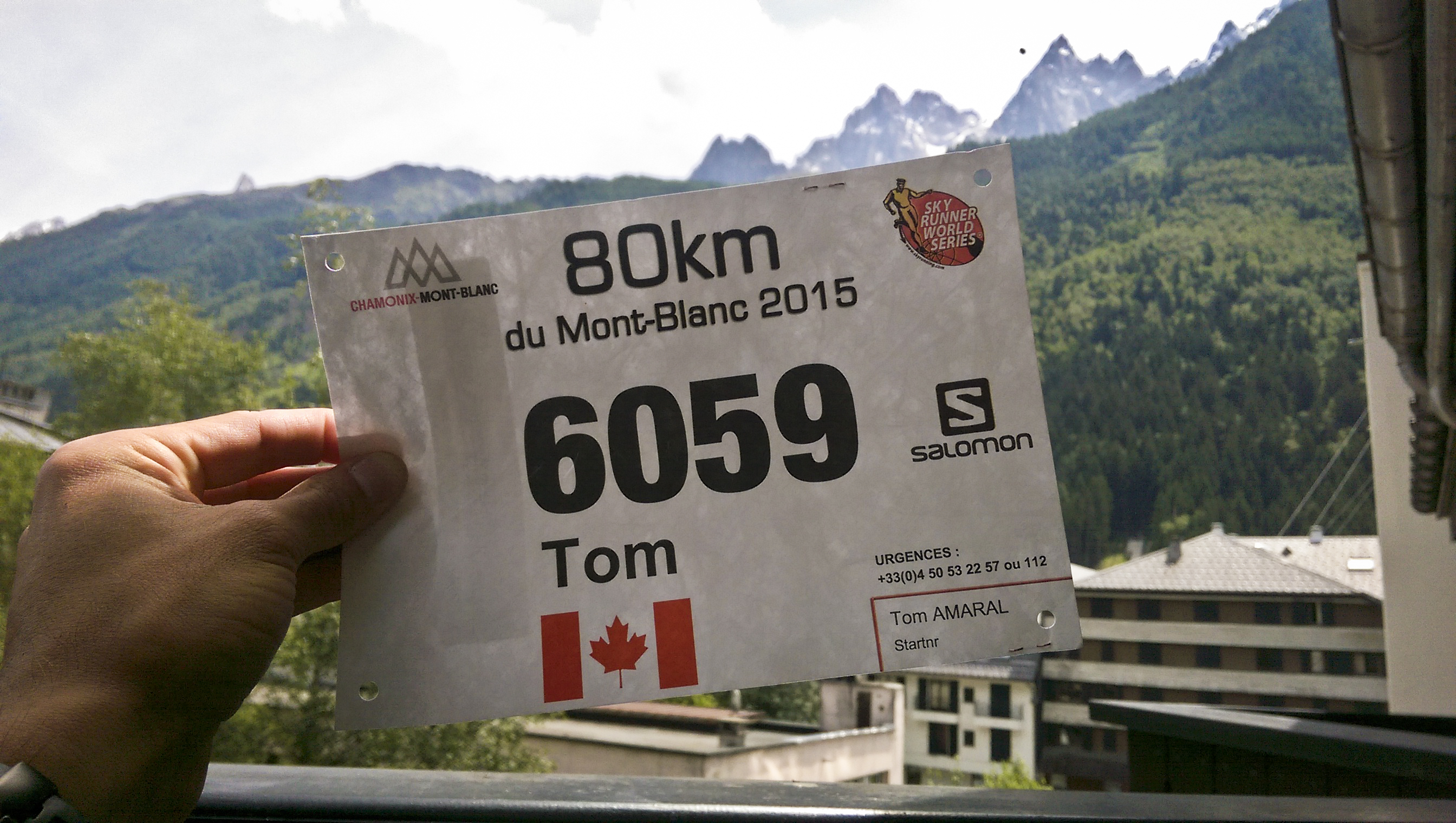
2 3 4 5 6 7 8 9 10 11 12 13 14Upon returning from Annecy and its surroundings, I had two days to kill, and while the 700m climb up Parmelan hadn’t been too detrimental, my body seemed to be taking its time to recover and feel fresh again. Hence, I mainly bummed around my apartment; skulked around shops and tried on gear; did a few last minute race things including collecting my bib; sketched the mountains from my balcony; and did typical tourist things like going up the Aiguille du Midi cablecar and visiting the cemetary… I knew from reading Mark Twight’s books what I would find there and wanted to see for myself: a bunch of young kids forever entombed in the massive of Mont Blanc. What I love about Chamonix is its lack of coddling or knee-jerk reaction to the deaths of young alpinists doing what they love. Their loss is profoundly saddening and I teared up reading many of the placards, but what is more inspiring is the celebration and support for individuals who push and challenge themselves in the mountains. That support extends to the cheering that takes place in Chamonix for every single ultrarunner coming in at ten hours, twenty hours, or twenty minutes before cutoff, in the wee hours of the morning.

15 17 18 19a 19b 19c 20With one day left, I didn’t do much besides head up Brevent via the cablecar to seek a little solitude, like Herb Elliott advises before an athletic performance. It was good to be there, clearing my head, condensing some of the thoughts that had been rolling around all week, and just being with the Aiguilles Rouges — the mountain I have the most relationship with here and the first I would have to traverse in less than 12 hours — and the Mont Blanc, so impressive across the way. Chamonix is a special place, and the Mont Blanc massive has an aesthetic and ambiance which can hypnotize and transform one’s psyche. I went home that evening, crushed a jurassiene calzone from the pizza joint next door, packed up my running vest and went to sleep, with two alarms set to 2:30am and thoughts of gnarly mountain races dancing in my head.

22 23 24

Scree of Chamonix – June 20-25